
The Vivid Perspective Series: Mid-Year Marketing Reset Edition; Part 3 of 5; Insights on Branding, Marketing & Storytelling
Audience Targeting Strategy for Small Businesses, Nonprofits & Public Organizations: Why Precision Drives Performance
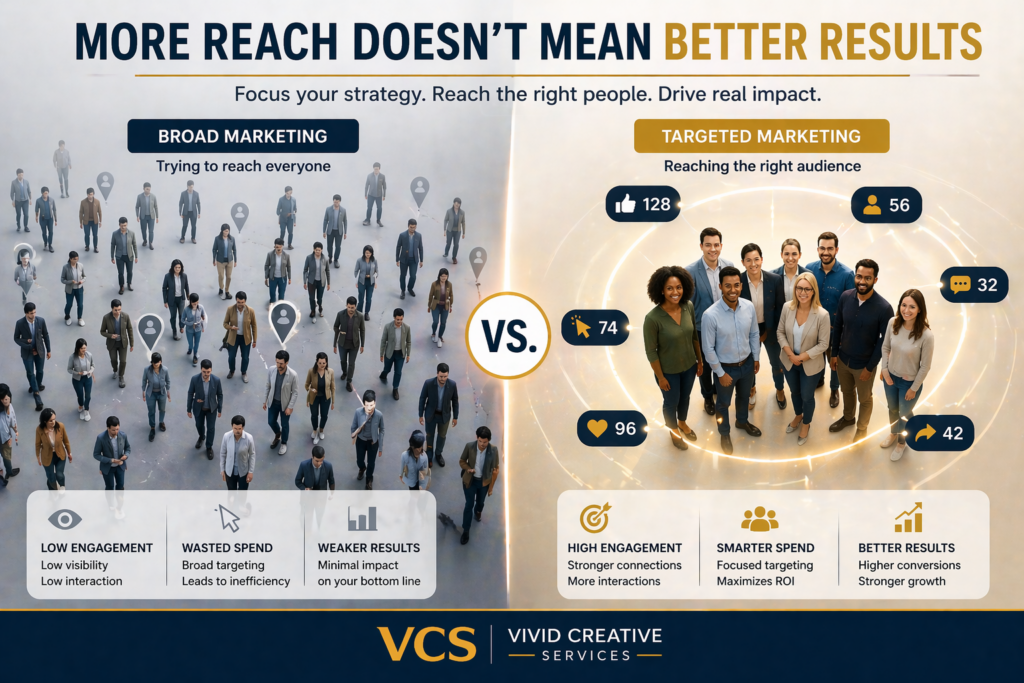
One of the most common frustrations leaders face is not a lack of effort—but a lack of results that match the effort. Campaigns are launched, content is created, budgets are spent, yet engagement feels inconsistent and conversions remain unpredictable. Whether you’re leading a small business, nonprofit organization, school district, or local government agency, the issue often comes down to one critical factor: audience targeting strategy. If your marketing is not reaching the right people, even the best strategy will underperform. Mid-year presents the perfect opportunity to refine your targeting approach using real data, real insights, and real-world feedback. This is not about reaching more people, it’s about reaching the right people with the right message at the right time. When you improve targeting, everything else becomes more effective.
Before refining your targeting strategy, it’s important to understand the most common questions leaders are asking at this stage.
Top 25 Audience Targeting Questions Leaders Are Asking Right Now (And What They Reveal About Your Strategy)
At Vivid Creative Services, we hear consistent questions that signal deeper targeting challenges, and these questions are often the reason for marketing performance stalls. Leaders are not just asking how to reach more people, they’re asking how to reach the right people in a meaningful way.
Audience Clarity
- Who is my ideal audience right now?
- Has my audience changed this year?
- Am I targeting too broadly?
- How do I define my ideal customer or supporter?
- What data should I use to understand my audience?
Engagement & Behavior
- Why are people seeing my content but not engaging?
- Why am I getting clicks but no conversions?
- What motivates my audience to take action?
- How do I improve audience engagement?
- What content resonates most with my audience?
Segmentation & Strategy
- Should I segment my audience further?
- How many audience segments should I have?
- How do I tailor messaging for different audiences?
- What’s the difference between targeting and positioning?
- How do I avoid overcomplicating segmentation?
Channels & Reach
- Where is my audience spending time?
- Am I using the right marketing channels?
- Should I focus on digital or offline strategies?
- How do I reach new audiences?
- How do I re-engage existing audiences?
Growth & Optimization
- How do I expand my audience without losing focus?
- What signals tell me my targeting is off?
- How often should I adjust my audience strategy?
- What are quick wins for better targeting?
- How do I know when my targeting is working?
These questions reveal one truth: targeting is not static—it evolves with your organization, your audience, and your market.
What This Means for You: If your targeting feels unclear, your results will feel inconsistent. Clarity in your audience leads directly to clarity in your outcomes.
Now let’s define what effective audience targeting actually looks like in practice.
What an Effective Audience Targeting Strategy Looks Like (And Why Most Organizations Get It Wrong)
An effective audience targeting strategy is built on clarity, data, and intentional decision-making—not assumptions. Many organizations make the mistake of trying to reach everyone, believing that broader reach leads to better results. In reality, broad targeting often leads to diluted messaging and lower engagement. Strong targeting requires defining who your audience is, understanding their needs, and aligning your messaging to those needs. For example, a small business may discover that its most profitable customers share specific characteristics, while a nonprofit may identify key donor segments that respond to different messaging approaches. Without this clarity, marketing becomes generic and less effective. Precision creates relevance, and relevance drives results.
To improve your targeting, you need a structured process—one that helps you move from assumptions to insights.
Step 1: Define and Refine Your Ideal Audience Profile
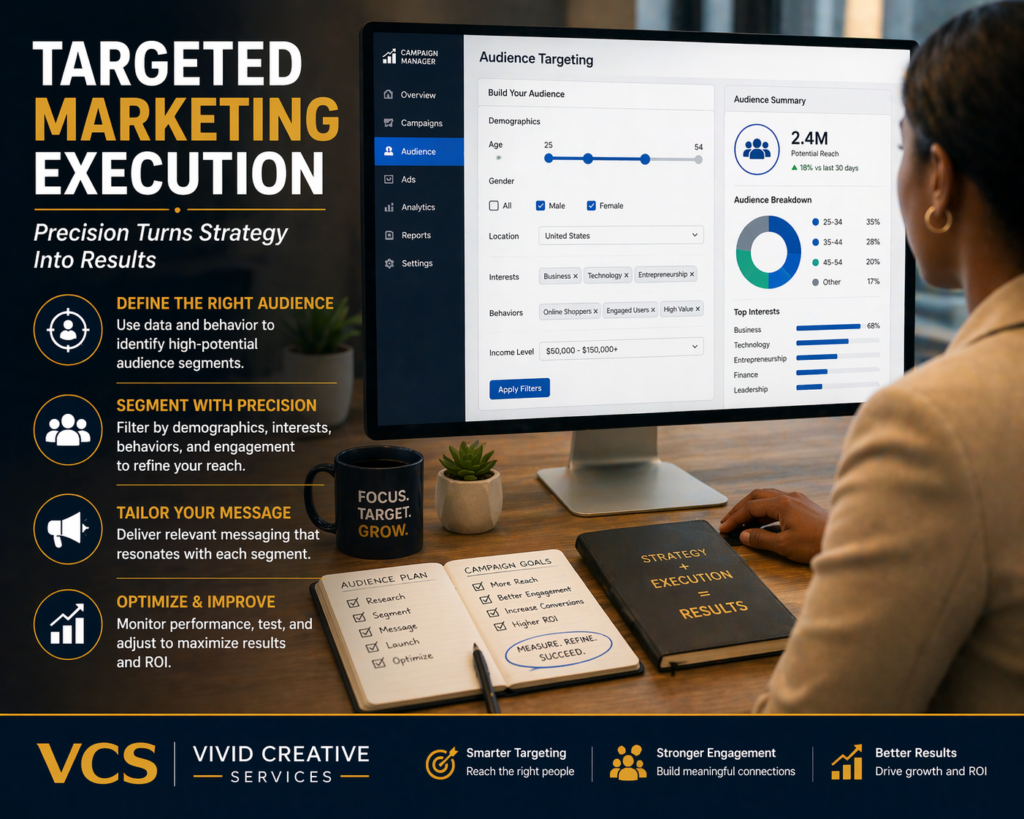
The foundation of any successful targeting strategy is a clearly defined audience profile. This includes demographic information (age, location, income), behavioral insights (buying habits, engagement patterns), and psychographic factors (values, motivations, interests). At mid-year, it’s important to revisit and refine this profile based on actual performance data. For example, a service-based business may realize that its highest-value clients come from a specific segment, while a school district may identify key characteristics of families most likely to enroll. This step is about clarity—understanding who you are trying to reach and why they matter to your organization.
What This Means for You: If you don’t clearly define your audience, your marketing will default to guesswork.
Once your audience is defined, the next step is understanding how they behave and engage.
Step 2: Analyze Audience Behavior and Engagement Patterns
Understanding your audience goes beyond demographics—it requires analyzing how they interact with your marketing. This includes reviewing engagement data, website behavior, content performance, and conversion patterns. What content are they engaging with? Where are they dropping off? What actions are they taking? These insights provide valuable clues about what resonates and what doesn’t. For example, a nonprofit may find that storytelling content drives more engagement than informational posts, while a business may discover that certain offers generate higher conversion rates. Behavior reveals intent, and intent guides strategy.
What This Means for You: Your audience is already telling you what works—you just need to listen.
Now that you understand behavior, the next step is refining how you segment your audience.
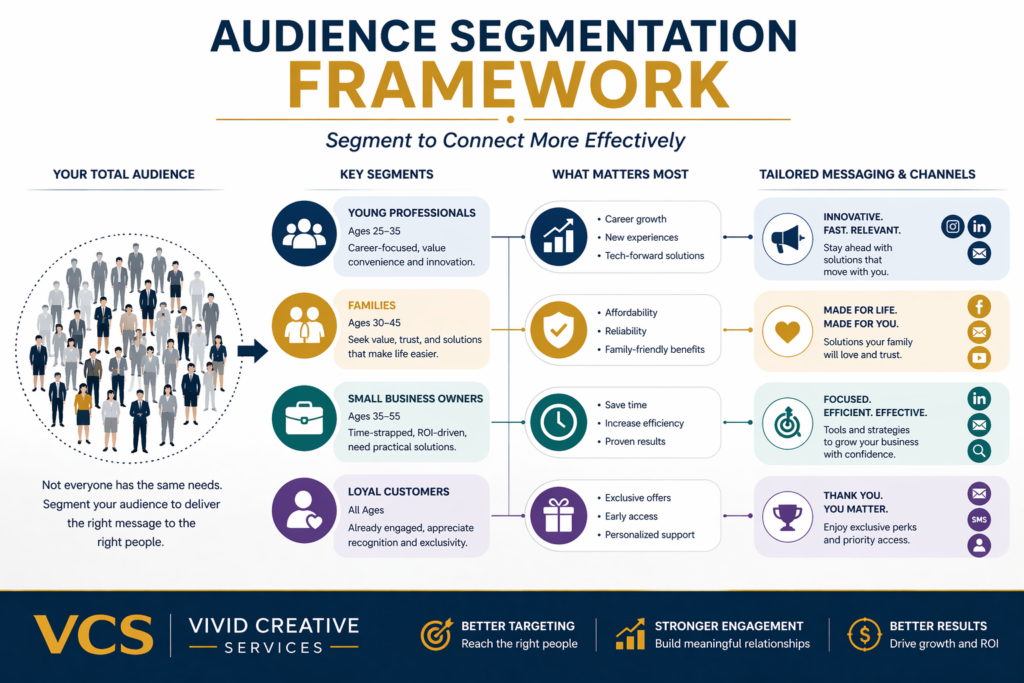
Step 3: Segment Your Audience for More Personalized Marketing
Segmentation allows you to move from general messaging to targeted communication. Instead of treating your audience as one group, you divide it into smaller segments based on shared characteristics or behaviors. This allows you to tailor your messaging and improve relevance. For example, a nonprofit may segment donors by giving history, while a business may segment customers by purchase behavior. The key is to keep segmentation strategic—not overly complex. Focus on segments that will have the greatest impact on your results.
What This Means for You: Personalization starts with segmentation—when you speak directly to your audience, they are more likely to respond.
Once your audience is segmented, the next step is ensuring your messaging aligns with each segment.
Step 4: Align Your Messaging With Audience Needs and Expectations
Your messaging must reflect the needs, challenges, and motivations of your audience. This means adapting your value proposition, tone, and content to resonate with each segment. Many organizations struggle with messaging because they focus on what they want to say rather than what their audience needs to hear. For example, a small business may emphasize features instead of benefits, while a nonprofit may focus on organizational goals instead of community impact. Effective messaging is audience-centered—it speaks directly to what matters most.
What This Means for You: When your messaging aligns with your audience, engagement and conversions naturally improve.
Now let’s ensure you are reaching your audience through the right channels.
Step 5: Optimize Your Channels to Reach the Right Audience at the Right Time
Even the best targeting strategy will fail if it’s not executed through the right channels. This step involves evaluating where your audience spends time and ensuring your marketing efforts are focused on those channels. This may include social media platforms, email marketing, search engines, or community outreach efforts. For example, a local government agency may need to focus on community-based channels, while a business may prioritize digital advertising. Channel optimization ensures your message reaches your audience when they are most receptive.
What This Means for You: Being present in the right place at the right time is just as important as having the right message.
From Targeting to Growth: Turning Audience Insights Into Measurable Results
Refining your audience targeting strategy is not just about improving engagement—it’s about driving measurable results. When your targeting is clear, your messaging becomes more effective, your campaigns become more efficient, and your ROI improves. This is where strategy turns into growth. By continuously evaluating and refining your audience approach, you create a marketing system that adapts and improves over time.
Audience Targeting FAQ: Quick Answers for Better Strategy
How often should I update my audience targeting? At least mid-year, or whenever performance shifts.
Is it better to target broadly or narrowly? Narrow, focused targeting typically delivers stronger results.
Do I need multiple audience segments? Yes, but keep them strategic and manageable.
What’s the biggest targeting mistake? Trying to reach everyone instead of the right audience.
The Right Audience Changes Everything
A refined audience targeting strategy is one of the most powerful ways to improve your marketing results. When you reach the right people with the right message, your efforts become more efficient, your engagement improves, and your outcomes become more predictable. Mid-year is the perfect time to make these adjustments and position your organization for stronger performance in the months ahead.
Your Next Steps:
👉 Review your current audience targeting strategy
👉 Identify 1–2 areas for refinement
👉 Align your message with your audience
👉 Explore the Year-End Marketing Playbook & Toolkit (Link)
👉 Schedule a Discovery Session with Vivid Creative Services (Link)