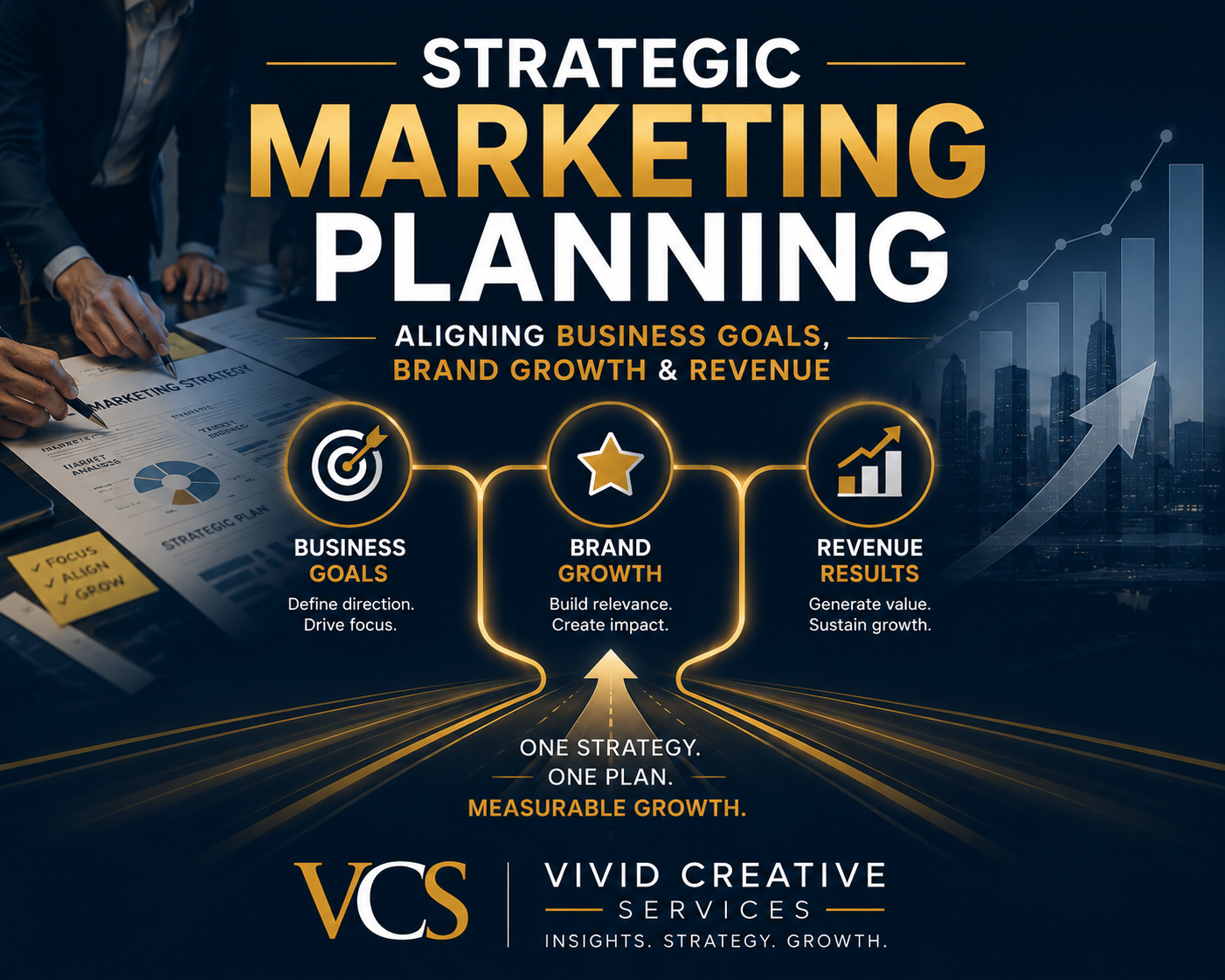

The Vivid Perspective Series: Insights on Branding, Marketing & Storytelling; Marketing Leadership for Growth: How Smart Organizations Scale with Strategy, Not Just Execution; Part 2 of 4
Without Alignment, Even Good Marketing Will Underperform
One of the most common frustrations organizations face is not a lack of marketing activity, but a lack of meaningful results. Campaigns are launched, content is created, and budgets are spent—yet growth remains inconsistent or difficult to measure. This happens when marketing operates independently of business goals rather than in alignment with them. When strategy is unclear or disconnected, even well-executed marketing efforts can fall short. Alignment is what transforms marketing from a series of activities into a cohesive growth engine. Without it, organizations risk investing time and resources without seeing the return they expect. Understanding the importance of alignment is the first step toward building a marketing strategy that truly supports business success.
If this challenge feels familiar, it often points to a deeper issue beyond tactics or execution. In many cases, the root cause is a lack of clear marketing leadership guiding direction and priorities. If you have not yet explored this perspective, we recommend starting with our foundational article, “Marketing Leadership vs Execution: Why Your Organization Is Stuck (and How to Fix It)”, which breaks down why so many organizations struggle to turn activity into results and how leadership changes everything (Click here to Story #1 of this series).
Who This Matters For: Leaders Responsible for Growth and Results
Strategic marketing planning is not just a marketing function—it is a leadership responsibility. This is especially true for organizations navigating growth, expansion, or increased competition. Whether you are leading a small business under $10 million in revenue, managing a private equity-backed company, overseeing a nonprofit organization, or directing a healthcare or educational institution, the pressure to produce measurable results is constant. Professional service firms and government agencies also face increasing expectations to demonstrate value and impact. In each of these environments, marketing plays a critical role in driving awareness, engagement, and conversion. When leadership and marketing are aligned, organizations are better equipped to achieve their goals. When they are not, progress becomes fragmented and difficult to sustain.
What Strategic Marketing Planning Actually Means (and What It Doesn’t)
Strategic marketing planning is often misunderstood as a document or a one-time exercise. In reality, it is an ongoing process that connects business objectives with marketing actions. It defines where the organization is going, who it is trying to reach, how it will position itself, and what actions will drive results. It is not about creating more campaigns or adding complexity, it is about creating clarity. Strategic planning ensures that every marketing decision is intentional and aligned with broader goals. Without this clarity, teams may default to tactics that feel productive but lack impact. With it, organizations gain a roadmap that guides decision-making and prioritization. This distinction is critical for leaders who want to move from reactive marketing to intentional growth.
The 5 Core Elements of Strategic Marketing Alignment
At the foundation of effective marketing planning are five core elements that must work together.
- First, clearly defined business goals establish the direction and desired outcomes.
- Second, a deep understanding of the target audience ensures that messaging resonates and reaches the right people.
- Third, a strong brand position differentiates the organization and communicates its value.
- Fourth, a focused channel strategy determines where and how to engage the audience.
- Finally, a measurement framework tracks performance and informs ongoing decisions.
When these elements are aligned, marketing becomes more effective and efficient. When they are disconnected, organizations experience confusion, inconsistency, and missed opportunities. Alignment across these areas is what drives sustainable growth.
25 Questions Leaders Ask When Trying to Align Strategy and Growth
As organizations begin to evaluate their marketing alignment, a series of important questions often arise. Leaders ask: Are our marketing efforts tied to revenue goals? Do we truly understand our audience? Is our messaging clear and differentiated? Which channels should we prioritize? How do we measure success effectively? Are we investing in the right initiatives? Why do some campaigns perform while others fail? How do we create consistency across teams? These questions are not obstacles; they are indicators of a desire for clarity and improvement. Addressing them requires a structured approach that connects strategy with execution. When leaders take the time to answer these questions, they create a stronger foundation for decision-making and growth.
What This Looks Like in the Real World
Consider a nonprofit organization focused on increasing community engagement and donor support. Their marketing efforts include social media, email campaigns, and events, yet results vary widely from month to month. Upon closer evaluation, it becomes clear that their activities are not directly tied to specific organizational goals. Messaging changes frequently, and success metrics are inconsistent. By implementing a strategic marketing plan, the organization defines clear objectives, identifies key audience segments, and aligns messaging across all channels. They establish measurable goals for engagement and donations, creating a framework for evaluating success. Over time, marketing becomes more consistent, donor engagement improves, and results become more predictable. This example highlights the power of alignment in driving meaningful outcomes.
How The Vivid Journey™ Connects Strategy to Customer Experience
Strategic marketing planning is most effective when it aligns with how customers actually make decisions. This is where The Vivid Journey™ becomes a powerful guide. The framework outlines the progression from awareness (Know) to interest (Like), trust (Trust), action (Try & Buy), and long-term loyalty (Repeat & Refer). When marketing strategy is aligned with these stages, organizations are able to meet their audience where they are and guide them forward intentionally. Rather than relying on disconnected tactics, leaders can design experiences that build relationships over time. This alignment ensures that marketing efforts are not only strategic, but also human-centered. When strategy and experience work together, organizations create stronger connections and better results.
The Cost of Misalignment: Where Strategy Breaks Down
When marketing and business goals are not aligned, organizations often experience a range of challenges. Campaigns may generate attention but fail to convert into meaningful outcomes. Teams may invest in channels that do not reach the right audience. Messaging may shift frequently, creating confusion and weakening brand trust. Budgets may be allocated inefficiently, reducing overall return on investment. These challenges are not always immediately visible, but they accumulate over time. Misalignment creates friction, slows growth, and increases frustration among both teams and leadership. Addressing these issues requires a deliberate effort to reconnect strategy with execution and ensure that every initiative supports the organization’s objectives.
How to Build a Strategic Marketing Plan That Actually Works
Building an effective marketing plan does not require complexity, it requires clarity and discipline. Start by defining your top business goals for the next quarter or year. Identify the audiences that are most critical to achieving those goals. Clarify your value proposition and how it differentiates your organization. Select a limited number of channels where your audience is most active, rather than trying to be everywhere. Establish clear metrics to track progress and evaluate performance. Finally, create a roadmap that outlines priorities and timelines. This process transforms planning from a theoretical exercise into a practical tool for execution. When done correctly, it provides a clear path forward for both leadership and teams.
As you begin to build a more aligned and intentional marketing plan, the next important question becomes how to structure leadership and execution to support it effectively. Should you build internally, outsource, or consider a hybrid approach? In the next article in this series, “Fractional CMO vs In-House Marketing: The Smartest Way to Scale Without Overhiring,” we explore the most effective ways organizations are structuring their marketing leadership to support growth without unnecessary overhead.
From Planning to Performance: Turning Strategy into Results
A strategic plan is only valuable if it leads to action and results. This requires consistent execution, ongoing measurement, and a willingness to adapt. Leaders must ensure that teams understand the strategy and how their work contributes to broader goals. Regular reviews help identify what is working and what needs adjustment. Data should inform decisions, allowing organizations to optimize their efforts over time. This continuous cycle of planning, execution, and evaluation creates a system for growth. When strategy is actively managed, marketing becomes more predictable and effective. This is where organizations begin to see the full impact of alignment.
Continue the Leadership & Strategic Marketing Series
If you’re looking to strengthen your marketing leadership and build a more strategic approach to growth, continue with the next articles in this series:
👉 Start Here: Marketing Leadership vs Execution: Why Your Organization Is Stuck (and How to Fix It) – LINK
👉 Next Up: Fractional CMO vs In-House Marketing: The Smartest Way to Scale Without Overhiring – LINK
Each article builds on the last—helping you move from awareness, to alignment, to execution.
Take the Next Step Toward Alignment and Growth
If your marketing feels disconnected from your business goals, now is the time to take action. Start by evaluating your current approach and identifying areas where alignment is missing. Use the Marketing Leadership Scorecard to assess your organization’s strengths and gaps (Click here to get the scorecard). This simple step can provide valuable insight into where to focus your efforts. From there, consider scheduling a Marketing Leadership Discovery Session with Vivid Creative Services (Click here to schedule a Discovery Session). Together, we can explore your goals, clarify your strategy, and create a plan that aligns your marketing with your vision for growth. Strategic alignment is not a luxury—it is a necessity for organizations that want to succeed in today’s environment.