

The Vivid Perspective Series, Digital Marketing Strategies 2026; Part 3 of 4
The school principal looked exhausted as she said, “We send emails every week, but parents still tell us they didn’t know what was happening.”
A nonprofit director echoed the same frustration: “We have a newsletter, but donations aren’t increasing. Are people even reading it?”
And a small organization leader shared: “We know email matters… we just don’t know how to do it well.”
The truth is simple: Email marketing isn’t failing — the approach is. And for small teams, nonprofits, and schools, email becomes overwhelming when messages lack structure, clarity, and emotional purpose.
But here’s the good news: Email is still the highest-performing digital channel for mission-driven organizations. It has:
- The highest engagement
- The strongest conversion rates
- The most reliable reach (no algorithm needed)
- The greatest ability to tell authentic, powerful stories
When email is done right — with story, structure, segmentation, and simplicity — it becomes the heartbeat of your communication system. This guide will show you exactly how to do it.
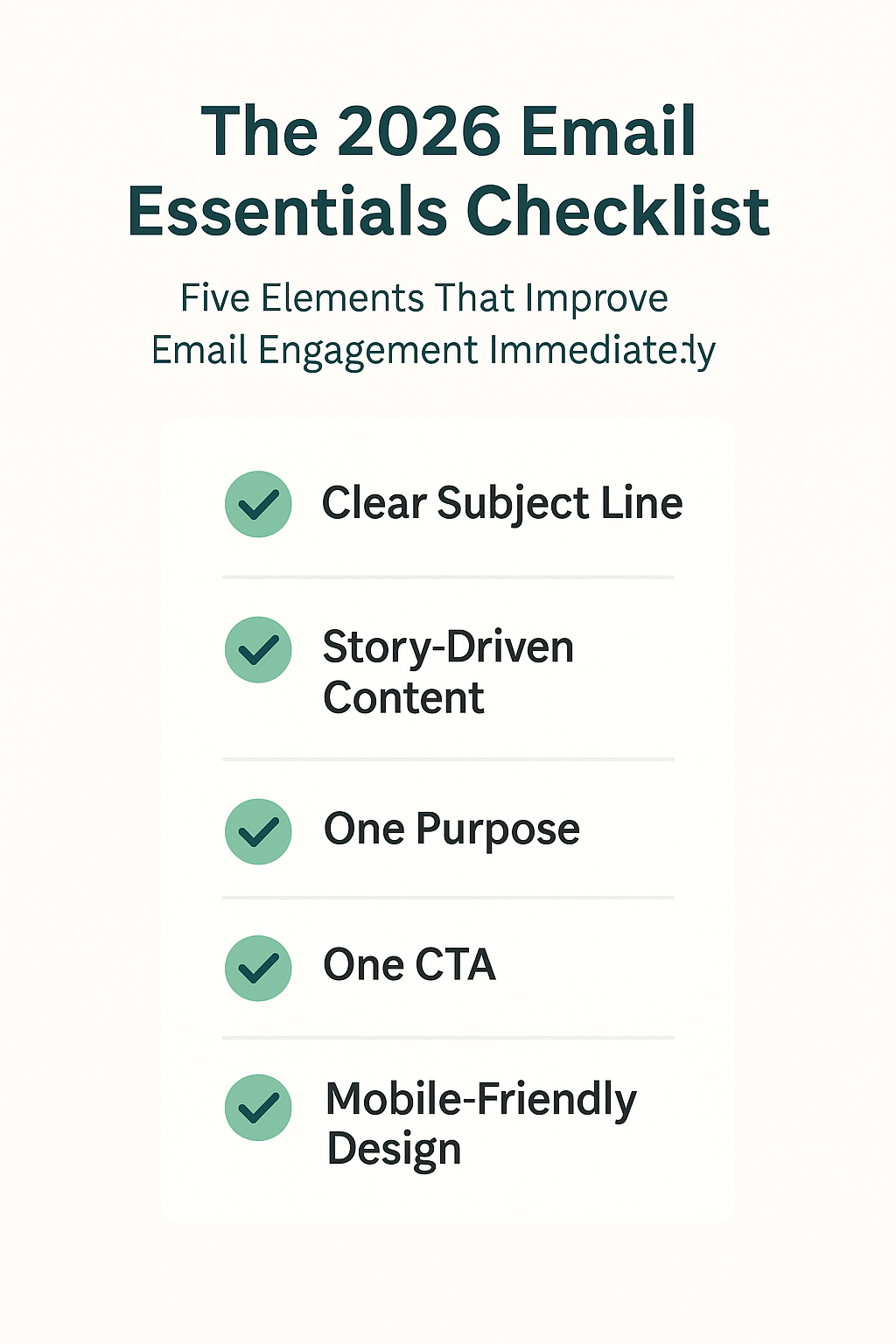
Why Email Still Works for Nonprofits & Schools in 2026
In a world of short-form video, crowded social feeds, and constant digital noise, email remains the most direct, stable, and personal communication channel. Here’s why:
1. Email reaches people where they make real decisions
Families, donors, volunteers, and partners check email for:
- Important information
- Confirmations
- Calls to action
- Updates they trust
2. Email doesn’t depend on algorithms
If you send a message, it arrives. Unlike social media, your visibility isn’t suppressed by platform changes.
3. Email builds trust over time
Consistent rhythm = consistent engagement. People trust organizations that communicate predictably and clearly.
4. Email converts better than any digital channel
Nonprofit donor email averages:
- Open rate: 28–35%
- Click-through: 3–6%
- Giving response: Highest among all channels
School family engagement emails average: Open rate: 55–72% (when done well)
When used with intention, email is the most cost-effective, relationship-building, mission-advancing tool nonprofits and schools have.
The Top 25 Email Marketing Questions Nonprofits & Schools Ask
These questions represent the highest-searched pain points, challenges, and how-to queries mission-driven organizations type into search engines every day.
1. How often should nonprofits and schools send emails?
Answer: Once a week or every other week is ideal. Consistency matters more than frequency.
Micro-Story: A charter school cut emails from daily to twice weekly — and parent engagement increased 42%.
2. What is the best day to send emails?
Answer: Tuesday–Thursday mornings work best for most audiences.
3. What type of email gets the highest engagement?
Answer: Story-driven emails with clear purpose and a single CTA.
4. How long should emails be?
Answer: 150–300 words for updates; 300–600 words for storytelling.
5. What subject lines work best?
Answer: Short (5–7 words), personal, specific, and curiosity-driven.
6. Should nonprofits segment their lists?
Answer: Yes — segment by donors, volunteers, general subscribers, staff, or families.
7. Should schools segment their emails?
Answer: Yes — grade level, program, athletics, events, or emergency alerts.
8. How important is storytelling in email?
Answer: Essential. Stories increase reading time, emotional connection, and action.
9. What is the biggest mistake most organizations make?
Answer: Overstuffing emails with too much information.
10. Should emails include images?
Answer: Yes — one strong image increases engagement; too many reduce it.
11. What is a good open rate?
Answer: 25%+ for nonprofits; 50%+ for schools.
12. What is a good click-through rate?
Answer: 2–5% for most mission-driven organizations.
13. How do we improve low open rates?
Answer: Improve subject lines, clean your list, and send at consistent times.
14. How do we improve low click rates?
Answer: Simplify your CTA — one action per email.
15. Should we automate emails?
Answer: Yes — simple welcome sequences and reminders can save hours.
16. Which email platform should we use?
Answer: Mailchimp, Constant Contact, or Outlook for schools; MailerLite for small teams.
17. Should we use email templates?
Answer: Yes — brand consistency improves trust.
18. Should we resend to non-openers?
Answer: Yes — change the subject line and resend within 48 hours.
19. Do emojis help or hurt subject lines?
Answer: Use sparingly; they increase open rates for some audiences.
20. Should we personalize emails?
Answer: Yes — personalization increases opens and clicks.
21. Should nonprofits ask for donations by email?
Answer: Yes — but tell a story first and ask second.
22. Should schools ask for volunteers by email?
Answer: Yes — include simple sign-up links.
23. Should emails be mobile-friendly?
Answer: Yes — 70% of nonprofit and school emails are opened on mobile.
24. What makes an email feel trustworthy?
Answer: Clear sender name, consistent format, and authentic voice.
25. How do we reduce unsubscribe rates?
Answer: Send fewer, better emails — always aligned to purpose and value.
Now that we’ve answered the most common questions, let’s build the foundation for emails that truly work.
Storytelling: The Heart of Effective Email for Nonprofits & Schools
Email without storytelling becomes noise. Email with story becomes impact. Storytelling gives your organization:
- Emotion
- Connection
- Humanity
- Memory
- Trust
- Support
A simple storytelling formula: Problem → Person → Progress → Purpose → Invitation
Mini-Example:
- Instead of saying: “We served 300 families last month.”
- Say: “Maria walked into our food pantry for the first time last month, overwhelmed and unsure. Today, she’s one of 300 families whose story you helped change.”
People don’t respond to numbers — they respond to stories.
The Vivid Perspective Insight: Email Is a Relationship, Not a Broadcast
Every email you send either strengthens or weakens the relationship you have with your audience.
Your job isn’t to send information. Your job is to send clarity, support, value, and purpose.
Vivid Perspective: Email is not a task — it is the ongoing conversation that sustains your mission.
Real World Example: How One Nonprofit Raised 22% More in 90 Days Through Better Email
A mid-size youth services nonprofit struggled with donor retention. Their emails were:
- Too long
- Too crowded
- Too infrequent
- Too informational
VCS Strategy:
- Shift to weekly storytelling emails
- Add a “mission moment” at the top
- Drop from 7 topics to 2 per email
- End every email with a single purpose-driven CTA
Results (90 days):
- Open rate increased from 24% → 38%
- Click-through rate increased from 1.2% → 4.7%
- Donor re-engagement increased 22%
Takeaway: Better strategy creates better results — even without increasing volume.
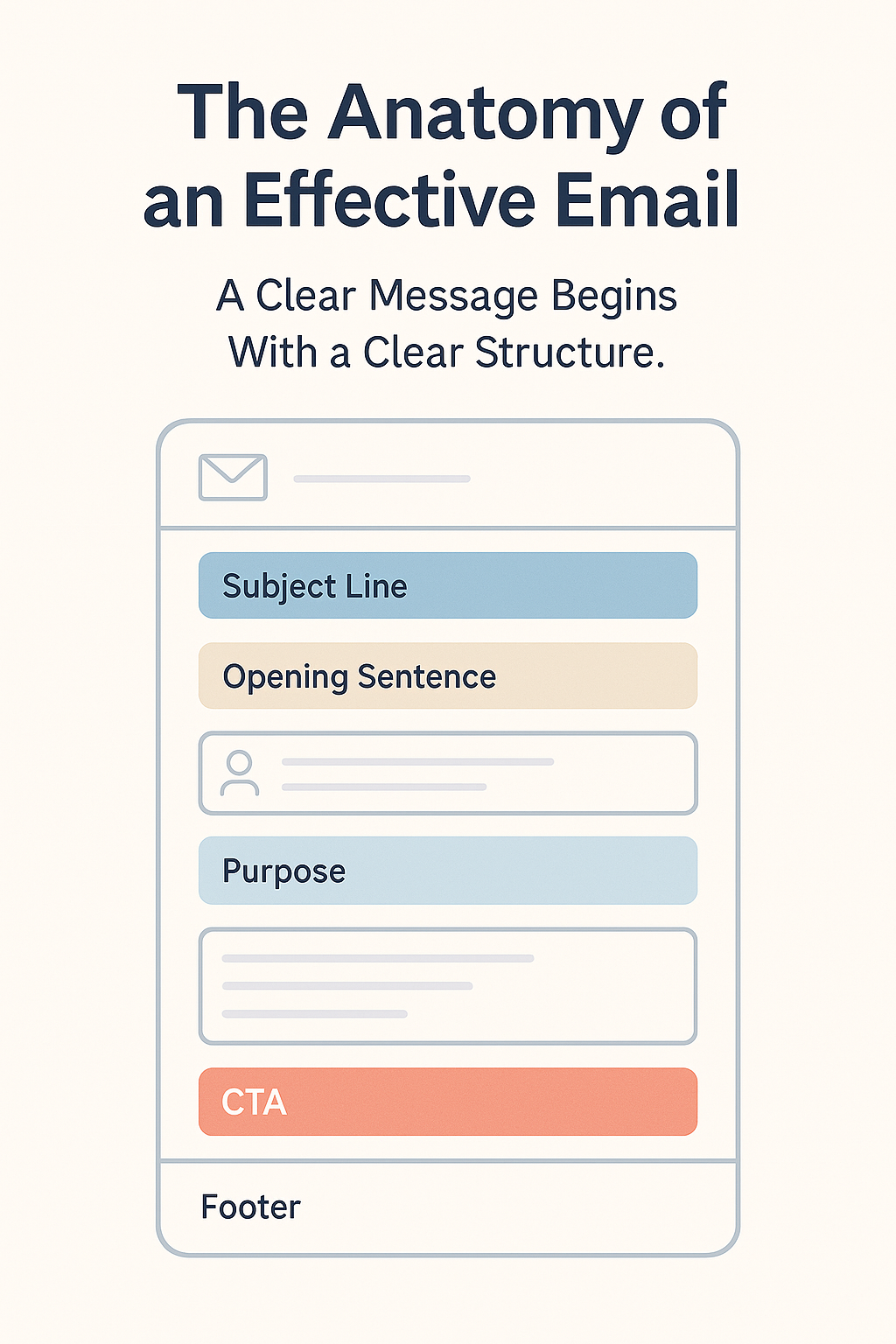
Email Marketing Mini-Toolkit for Nonprofits & Schools (2026 Edition)
1. The 5 Essential Email Types
- The Story Email
- The Update Email
- The Invitation Email
- The Thank You Email
- The Urgent Action Email
2. The 6-Part Email Structure
- Compelling subject line
- Strong intro sentence
- Story or message
- Clear purpose
- Simple CTA
- Clean footer
3. The Email Rhythm Guide
- Weekly: Story + CTA
- Monthly: Impact Summary
- Quarterly: Strategic Update
- As Needed: Event, urgency, alert
Story Review
Q: What is the best email strategy for nonprofits?
A: Tell mission-driven stories, send consistently, and use one CTA per email.
Q: What is the best email strategy for schools?
A: Keep emails short, segmented, predictable, and parent-focused.
Q: What improves email engagement the fastest?
A: Better subject lines, concise content, and clearer calls to action.
Glossary (Email Terms Made Simple)
- Automation: Pre-scheduled email sequences
- Bounce Rate: Emails that could not be delivered
- Click-Through Rate: Percentage who click your link
- CTA: Call to Action
- List Segmentation: Breaking your list into specific groups
- Open Rate: Percentage of people who open your email
Your Email Strategy Is a Direct Reflection of Your Mission
Strong email marketing isn’t about sending more messages. It’s about sending the right messages, at the right time, with the right purpose. For nonprofits and schools, every email is an act of service:
- A story told
- A community strengthened
- A donor inspired
- A family connected
- A mission advanced
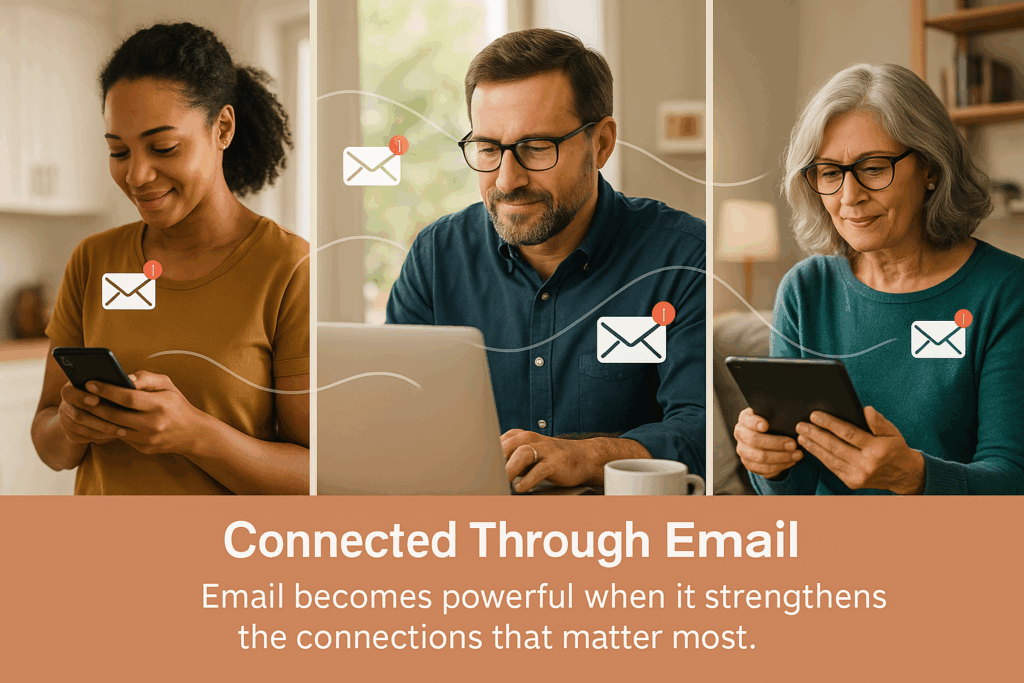
When you approach email with clarity, structure, story, and simplicity — you transform it into a powerful extension of your values and your work.
Vivid Creative Services is here to help you build that clarity.
For the DIYer, you can take immediate action 👉 Download the Digital Marketing Works Playbook & Toolkit Your step-by-step guide for SEO, content, and digital strategy.
Become a member of our digital family 👉 Subscribe to The Vivid Perspective Stay ahead with actionable insights every week.
Let’s launch a relationship together 👉 Schedule a Digital Visibility Discovery Session Let’s assess your current SEO, visibility gaps, and growth opportunities.