

Building Relationships, Credibility & Stories Journalists Want to Share
The Vivid Perspective: Insights on Branding, Marketing & Storytelling; Strategic Communications: Building Visibility, Credibility & Trust; Story 2 of 4
Quick Answer: How do organizations gain media coverage without a big budget?
If you remember only one lesson from this article, let it be this: Media coverage is not the objective—trust is.
Organizations that consistently earn positive media attention rarely achieve it because they spend the most money on public relations. They earn it because they become reliable sources of expertise, create meaningful community impact, cultivate authentic relationships, and tell stories that matter to the audiences journalists serve.
Before pitching reporters or distributing another press release, ask yourself:
- Is this story genuinely valuable to our community?
- Does it educate, inspire, or solve a problem?
- Have we built relationships with local media before asking for coverage?
- Does this reinforce what we want our organization to be known for?
When organizations consistently answer “yes” to those questions, media coverage becomes a natural outcome of a well-executed strategic communications strategy—not a matter of luck.
Why Some Organizations Earn Media Coverage While Others Are Never Noticed
Every organization wants greater visibility. Business owners want prospective customers to recognize their expertise. Nonprofit leaders hope more donors, volunteers, and community partners discover their mission. Schools want families to understand the value of their educational programs. Healthcare providers want patients to trust their care. Government agencies strive to keep citizens informed while strengthening public confidence.
Yet many organizations share a common frustration: “We’re doing great work, but no one seems to know about it.”
The first instinct is often to increase marketing efforts or hire a public relations firm. Leaders begin searching for media contacts, drafting press releases, or hoping a local reporter will notice their latest announcement.
Unfortunately, that’s where many organizations go wrong.
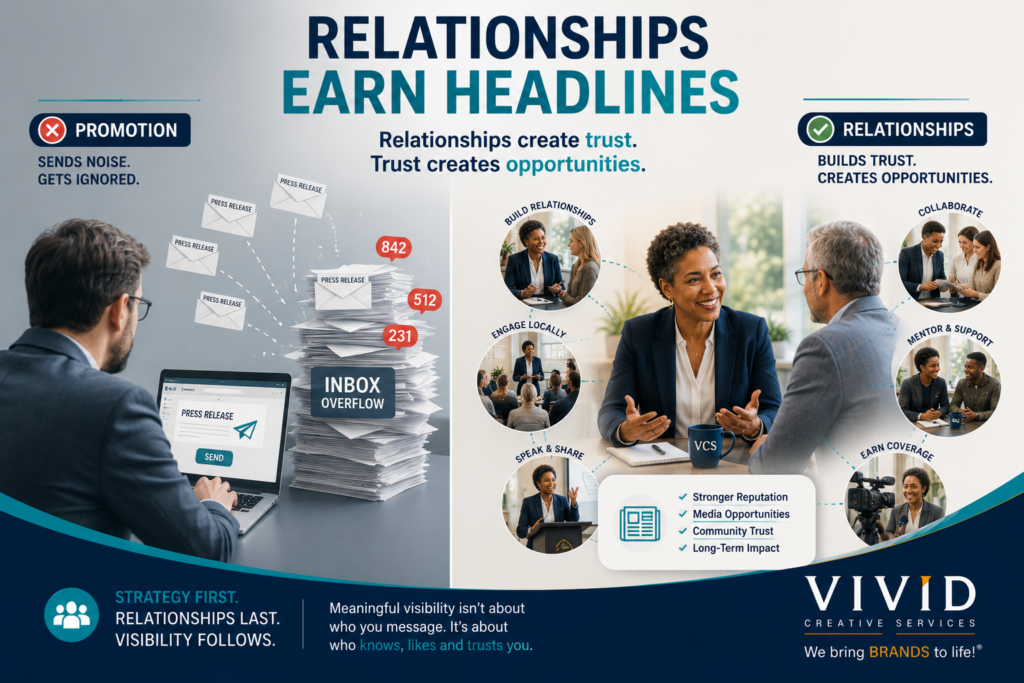
Media coverage isn’t something that organizations simply request or purchase. It’s something they earn.
The organizations that consistently appear in newspapers, online publications, television interviews, podcasts, industry newsletters, and community conversations usually aren’t the ones with the largest communications budgets. They’re the organizations that have become trusted sources of information, meaningful contributors to their communities, and reliable storytellers with something valuable to share.
In other words, journalists aren’t searching for organizations that want publicity. They’re searching for stories their audiences will care about.
That’s an important distinction.
Media outlets exist to serve their readers, viewers, and listeners—not to provide free advertising. Every story they publish competes for limited attention, which means organizations must offer more than a promotional announcement. They must provide relevance, insight, human impact, or timely information that helps the community better understand an issue, celebrate an achievement, or solve a problem.
This is why effective public relations begins long before anyone writes a press release.
It begins with strategy.
In the first article of this series, Before You Seek Publicity, Build a Strategic Communications Strategy (LINK), we explored why every organization needs a strategic communications strategy before pursuing visibility. That strategy establishes your organization’s purpose, messaging, audiences, and communication priorities.
Now it’s time to answer the next question. how do organizations actually earn media coverage—especially when they don’t have a large public relations budget.
The encouraging news is that meaningful media coverage has never depended solely on financial resources. It depends on relationships. It depends on credibility. It depends on consistently creating stories worth telling.
Whether you’re leading a growing business, nonprofit organization, school district, healthcare practice, government agency, or professional services firm, the same principle applies: When your organization becomes a trusted community resource, media opportunities often follow naturally.
The goal isn’t simply to get your name into the news. The goal is to build long-term visibility that strengthens trust, expands relationships, and reinforces your organization’s reputation as a credible leader in the communities you serve.
Why Media Coverage Still Matters in 2026
In today’s digital world, it’s easy to assume traditional media has lost its influence.
After all, organizations can publish their own content, post on social media, produce podcasts, send email newsletters, and communicate directly with their audiences without relying on journalists.
Those channels are valuable and should absolutely be part of a comprehensive communications strategy.
However, they serve a different purpose. When your organization tells its own story, people naturally recognize that you’re speaking on your own behalf. When an independent news organization chooses to tell your story, something different happens. Your organization receives third-party credibility. That credibility carries weight because it wasn’t self-proclaimed—it was earned.
A feature in a respected local newspaper, an interview on a regional television station, a quote in an industry publication, or recognition in a trusted community newsletter signals that your organization has become relevant beyond its own marketing efforts.
For many audiences, that’s meaningful.
- Potential customers gain confidence.
- Prospective employees become more interested.
- Donors see greater organizational legitimacy.
- Community leaders recognize your expertise.
- Partners become more willing to collaborate.
- Stakeholders begin associating your organization with leadership rather than promotion.
Media coverage also amplifies the value of every other communication channel.
A news story can be shared across social media, highlighted in newsletters, featured on your website, incorporated into presentations, included in grant proposals, referenced in fundraising campaigns, and used during recruitment efforts. One credible story often creates opportunities that extend far beyond its original publication.
Media recognition also strengthens your organization’s digital presence.
Search engines increasingly prioritize authoritative, trustworthy content when evaluating credibility. Mentions from reputable news organizations and industry publications help reinforce your organization’s expertise while providing additional signals that support search visibility and online reputation. In an era where people often research organizations before making decisions, credible third-party coverage contributes to both discoverability and trust.
Perhaps even more importantly, media coverage influences perception.
People naturally assume that organizations featured by respected media outlets are making meaningful contributions within their communities. While media attention alone doesn’t establish credibility, it can reinforce the trust you’ve already earned through consistent leadership, authentic relationships, and measurable impact.
That’s why organizations should never pursue publicity for publicity’s sake. Instead, they should pursue significance.
When your organization consistently creates value, serves its community, solves meaningful problems, and communicates with clarity, media coverage becomes less about attracting attention and more about documenting the positive impact you’re already making.
That’s the difference between chasing headlines and earning them. And it all begins with a strategic communications strategy built on purpose, credibility, and trust.
Why Journalists Ignore Most Organizational Stories
One of the biggest misconceptions about public relations is that journalists are constantly looking for organizations to feature. The reality is far more competitive.
Every day, reporters, editors, producers, and digital journalists receive dozens—sometimes hundreds—of emails, press releases, event invitations, and story pitches. Their inboxes are filled with organizations asking for coverage, each believing their announcement deserves attention.
Yet only a small percentage of those pitches ever become published stories. Why?
It’s usually not because the organization lacks credibility or because the reporter isn’t interested in the topic. More often, it’s because the story was written from the organization’s perspective instead of the audiences’.
That’s an important distinction.
- Organizations naturally focus on what they have accomplished.
- Journalists focus on what their audience want to know.
Those are not always the same thing. Understanding that difference can dramatically improve how your organization approaches strategic communications.
Here are five of the most common reasons meaningful stories never receive media attention.
The Story Sounds Like Advertising
If every sentence celebrates your organization, readers quickly recognize it as marketing rather than news.
Statements such as: “We’re excited to announce…,” “We’re the leading provider…,” or “Our award-winning organization…” may be appropriate for your website or marketing materials, but they rarely inspire a journalist to pursue the story.
Instead, ask yourself: Why should someone outside our organization care?
The answer should focus on community impact, innovation, leadership, or the people whose lives are being improved—not simply on organizational promotion.
There’s No Community Relevance
Media organizations exist to serve their audiences.
If your story doesn’t connect to a larger issue, local need, economic trend, educational opportunity, healthcare advancement, workforce challenge, or community benefit, it becomes much more difficult for journalists to justify covering it.
Organizations often underestimate how closely their work is connected to broader conversations.
- A nonprofit launching a mentoring program isn’t simply announcing a new initiative. It’s addressing youth development.
- A healthcare organization expanding services isn’t merely opening another location. It’s increasing access to care.
- A school introducing a new career pathway isn’t just adding a program. It’s helping prepare tomorrow’s workforce.
Those broader impacts are often the real story.
The Organization Only Reaches Out When It Wants Coverage
Relationships matter in public relations just as they do in every other aspect of business. Organizations that only contact journalists when they want publicity often remain strangers.
Organizations that consistently provide helpful information, credible experts, reliable data, thoughtful perspectives, and community insights become trusted resources over time.
The strongest media relationships are built long before the next news announcement.
The Timing Isn’t Right
Even an excellent story may receive little attention if it arrives at the wrong moment.
- Breaking news.
- Weather emergencies.
- Major sporting events.
- Election coverage.
- Economic developments.
- National stories.
All of these can dramatically change editorial priorities within minutes.
Rather than assuming a rejected pitch reflects the quality of your story, recognize that timing often plays a significant role in newsroom decision-making.
Sometimes the right story simply needs the right moment.
The Story Doesn’t Offer Anything New
Organizations frequently announce routine updates that matter internally but offer little external significance.
- A leadership promotion.
- A routine board meeting.
- A standard service update.
While these developments may be important to employees or stakeholders, they don’t necessarily provide enough value for a broader audience.
The question every leader should ask is simple: What’s genuinely different, meaningful, or useful about this story?
That question often transforms ordinary announcements into compelling narratives.
Executive Insight
Journalists aren’t looking for organizations that want publicity. They’re looking for stories that help their audiences understand their communities, solve problems, and discover people making a meaningful difference.**
Organizations that consistently understand this distinction don’t chase media attention.
They earn it.
What Makes a Story Truly Newsworthy?
If your goal is to earn meaningful media coverage, it’s helpful to think like a journalist rather than a marketer.
Instead of asking, “What do we want people to know?”
Ask, “Why would someone outside our organization find this valuable?”
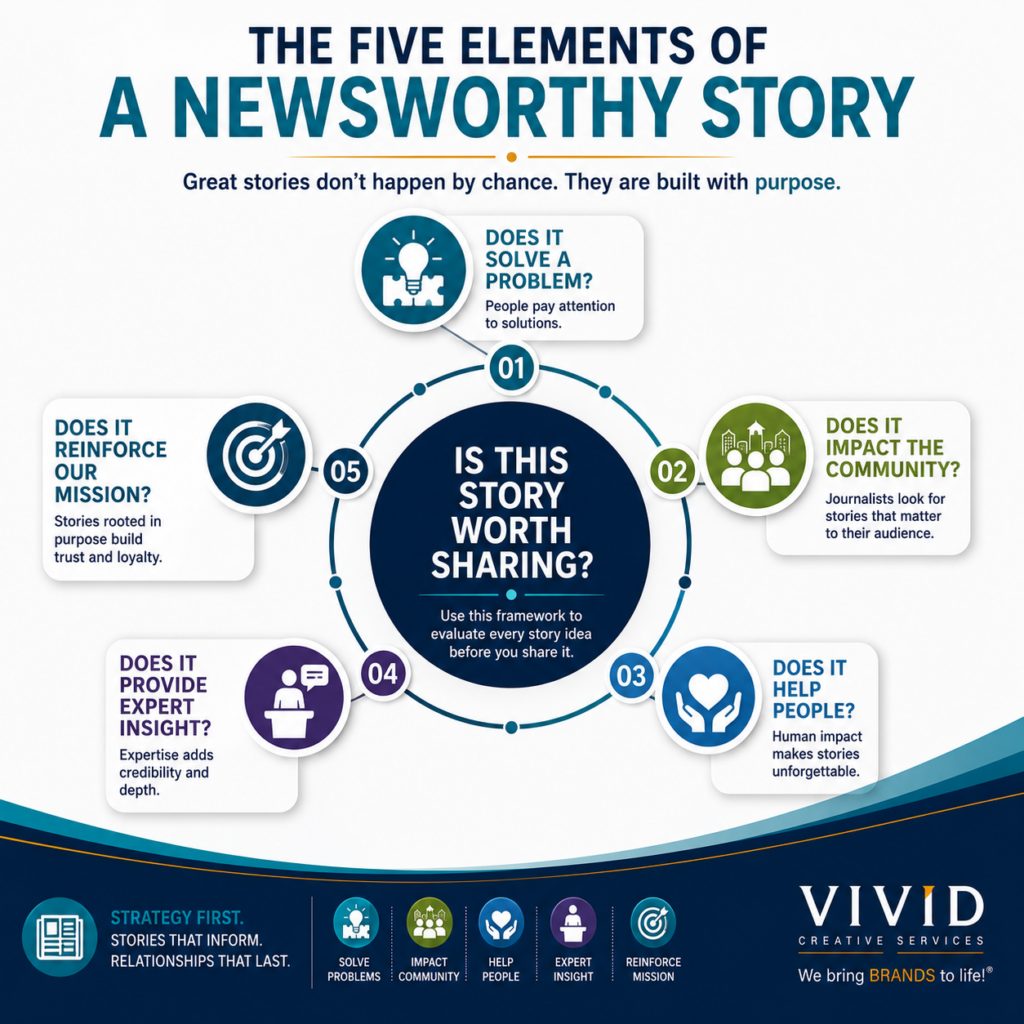
That shift in perspective changes everything. While every newsroom has its own editorial priorities, most compelling stories share several common characteristics.
They Solve a Meaningful Problem
Organizations addressing real community challenges naturally attract attention.
Whether it’s improving educational outcomes, expanding access to healthcare, supporting entrepreneurs, strengthening neighborhoods, or creating workforce opportunities, stories centered on solutions resonate because they demonstrate tangible impact.
People are drawn to organizations making life better—not simply promoting themselves.
They Put People at the Center
Facts and statistics are important. People remember stories.
Instead of leading with organizational accomplishments, highlight the individuals whose lives have been changed.
- A scholarship recipient.
- A small business owner.
- A patient.
- A volunteer.
- A teacher.
- A family.
Human stories create emotional connection while illustrating the broader value of your organization’s work.
They Offer Expertise
Journalists consistently seek knowledgeable voices who can explain complex topics clearly and provide practical insight.
If your leadership team can help audiences understand emerging trends, changing regulations, economic developments, healthcare concerns, educational innovations, or community issues, your organization becomes a valuable media resource—not just another organization seeking coverage.
Thought leadership often generates more media opportunities than traditional press releases.
They Connect to Current Conversations
Strong stories rarely exist in isolation. They connect to conversations already happening within the community.
- Economic development.
- Workforce shortages.
- Artificial intelligence.
- Public health.
- Education.
- Housing.
- Small business growth.
- Community revitalization.
When your organization’s work contributes to these broader discussions, journalists immediately recognize greater relevance for their audiences.
They Demonstrate Measurable Impact
Stories become more compelling when organizations can demonstrate results.
Instead of saying your initiative was successful, explain how success was measured.
- How many families were served?
- How many students graduated?
- How many businesses participated?
- How many volunteers contributed?
- What changed because your organization took action?
Specific outcomes build credibility while helping journalists communicate the significance of your work.
Six Strategy-First Ways to Earn Media Coverage
Organizations often ask, *”What’s the best way to get media attention?”*
The better question is:**”How do we become an organization worth covering?”**
The answer rarely begins with a press release. It begins with intentional leadership.
1. Become a Trusted Community Resource
Organizations that consistently educate, inform, and serve their communities naturally become go-to sources for journalists.
- Publish helpful articles.
- Share meaningful research.
- Offer practical insights.
- Host educational events.
- Answer common questions.
When your organization is known for adding value, media opportunities often follow.
2. Invest in Thought Leadership
Your expertise is one of your greatest communications assets.
Encourage organizational leaders to share informed perspectives on industry trends, emerging challenges, community issues, and innovative solutions. Journalists frequently need knowledgeable voices who can explain why current events matter.
Position your leaders to become those trusted experts.
3. Build Relationships Before You Need Them
Media relationships should never begin with a request.
- Follow local journalists.
- Read their work.
- Share stories that benefit your community.
- Attend community events where reporters are present.
- Offer expertise without expecting immediate coverage.
Trust develops through consistency, not transactions.
4. Tell Stories About Impact—Not Promotion
Every organization has announcements. Not every organization tells meaningful stories.
Shift your focus from organizational accomplishments to community outcomes. Instead of announcing what your organization did, explain how people’s lives improved because of it.
Impact is always more compelling than promotion.
Participate in Meaningful Community Conversations
Organizations that remain actively engaged in their communities naturally become more visible.
- Support collaborative initiatives.
- Partner with other organizations.
- Participate in local events.
- Celebrate community successes.
Visibility earned through authentic engagement carries far greater credibility than visibility created through self-promotion.
6. Think Beyond the Press Release
Press releases still have value. But they should be one tool within a broader communications strategy.
Complement every announcement with executive insights, social media storytelling, employee advocacy, website content, photography, video, community partnerships, and opportunities for ongoing conversation.
The strongest stories are reinforced across multiple communication channels, not confined to a single document.
Successful organizations don’t rely on one announcement to build their reputation. They consistently communicate their mission, expertise, and impact over time.
That’s how trust grows. And trust remains the strongest foundation for meaningful media coverage.
How Different Organizations Can Earn Media Coverage
One of the biggest misconceptions about public relations is that earning media coverage requires a one-size-fits-all approach. It doesn’t.
Every organization has unique audiences, challenges, and opportunities. While the principles of strategic communication remain consistent, the stories that resonate with journalists—and the communities they serve—look different depending on your mission.
The good news is that every organization has stories worth telling. The challenge is learning to recognize them.
Business Owners & Professional Service Firms
Business leaders often assume journalists want to hear about company growth, new products, or internal milestones. While those announcements may occasionally receive attention, reporters are usually more interested in the expertise behind the business.
Instead of asking, “How can we promote our company?” consider asking:
- What trends are affecting our customers?
- What misconceptions can we help people understand?
- What lessons have we learned that others could benefit from?
Organizations that consistently educate rather than advertise naturally become trusted industry voices.
Nonprofit Organizations
Nonprofits possess some of the most compelling stories in any community, yet many struggle to communicate their impact beyond fundraising campaigns.
The most effective nonprofit stories rarely begin with organizational achievements. They begin with people.
- Share the story of a family whose life has changed because of your services.
- Highlight a volunteer whose commitment has strengthened your mission.
- Demonstrate how donor support created measurable outcomes within the community.
When journalists see people rather than programs, the impact becomes tangible.
Educational Institutions
Schools often communicate through calendars, newsletters, and announcements.
While those communications serve current families well, they rarely capture broader community attention.
Instead, consider stories that demonstrate innovation, student achievement, workforce development, community partnerships, or educational excellence.
Parents aren’t simply choosing a school. They’re investing in their child’s future.
Stories that illustrate transformation, opportunity, and student success resonate far beyond the classroom.
Healthcare Organizations
Healthcare communication should never focus solely on services.
Patients are searching for trust. Media outlets are looking for expert perspectives that help communities make informed health decisions.
Whether discussing preventive care, emerging health trends, patient education, physician expertise, or community wellness initiatives, healthcare organizations that consistently educate become trusted resources for both journalists and patients.
Government Agencies
Government organizations communicate constantly. The opportunity is shifting from transactional communication to relationship-building communication.
Citizens want transparency.
They appreciate context. They value explanations that make complex decisions understandable.
Stories highlighting public improvements, collaborative partnerships, infrastructure investments, community engagement, and citizen impact help strengthen public confidence while demonstrating responsible leadership.
Across every sector, one principle remains true. Organizations earn meaningful media coverage when they consistently communicate value before asking for visibility.
Leadership Action Plan
Building stronger media relationships doesn’t happen overnight.
Like every aspect of strategic communications, it requires intentional planning, consistent execution, and a long-term perspective.
Here are five actions you can begin implementing this week.
1. Audit Your Last Five Announcements
Review your recent communications objectively.
- How many focused primarily on your organization?
- How many focused on the audience?
- How many demonstrated measurable community impact?
Look for opportunities to shift future stories from organizational promotion to audience value.
2. Identify Your Organization’s Experts
Every organization has knowledgeable people whose expertise deserves greater visibility.
Create a list of leaders, subject matter experts, board members, educators, clinicians, or specialists who could provide insight on topics relevant to your community.
Thought leadership begins by recognizing the expertise you already possess.
3. Build a Story Pipeline
Don’t wait until something exciting happens. Create an ongoing list of potential stories throughout the year.
- Community partnerships.
- Customer success stories.
- Volunteer impact.
- Research findings.
- Industry insights.
- Program milestones.
- Employee expertise.
When opportunities arise, you’ll already have meaningful stories ready to develop.
4. Strengthen Local Relationships
Identify the journalists, editors, producers, bloggers, podcasters, and community publications serving your audiences.
- Follow their work.
- Understand the stories they cover.
- Engage thoughtfully with their content.
Relationships built over time create trust that no press release can replace.
5. Measure More Than Media Mentions
Success isn’t simply the number of articles published. Measure how communications strengthen trust.
- Track stakeholder engagement.
- Monitor website traffic.
- Evaluate partnership opportunities.
- Assess community awareness.
- Review referral activity.
Meaningful communications generate organizational outcomes—not just headlines.
Micro FAQ
Do organizations still need press releases?
Yes, but they should support your communications strategy rather than define it. Press releases remain valuable for significant announcements, but they work best when combined with thought leadership, relationship-building, digital storytelling, and community engagement.
Should small organizations invest in public relations?
Absolutely. However, investment doesn’t always mean hiring a large PR agency.
Many organizations achieve meaningful visibility by developing a clear communications strategy, building relationships, and consistently sharing valuable stories.
How long does it take to earn media coverage?
There’s no universal timeline. Organizations focused on long-term credibility often see stronger, more sustainable results than those seeking immediate publicity.
Trust is built through consistency.
What if our organization doesn’t think we have interesting stories?
Nearly every organization underestimates the value of its own work.
If you’re solving problems, improving lives, educating communities, creating opportunities, or serving people, you already have stories worth telling.
The challenge isn’t creating stories. It’s learning to recognize them.
The VCS Perspective
At Vivid Creative Services, we’ve learned something after more than two decades of helping organizations strengthen their brands and communications.
The organizations that receive the greatest recognition aren’t always the largest. They aren’t always the oldest. And they certainly aren’t always the ones spending the most on public relations.
They’re the organizations that understand a simple but powerful principle: Visibility is earned by consistently creating value.
That’s why our Strategy First approach begins by understanding your mission, your audiences, your goals, and the impact you want to make—not by immediately discussing tactics.
When organizations communicate with clarity, authenticity, and purpose, they become trusted resources.
When they become trusted resources, journalists notice.
- Community leaders notice.
- Partners notice.
- Prospective employees notice.
- Customers notice.
- Donors notice.
Visibility becomes the natural outcome of credibility—not the substitute for it.
Public relations is most effective when it reflects the reputation you’ve already built through intentional leadership, meaningful relationships, and consistent communication.
That’s the kind of visibility that lasts.

Build Trust First. Media Coverage Will Follow.
It’s easy to believe that media coverage belongs only to organizations with dedicated communications departments or substantial public relations budgets. Fortunately, that’s not how meaningful visibility works.
Journalists aren’t looking for the loudest organizations. They’re looking for organizations making a meaningful difference.
When your communications strategy is grounded in purpose, your stories become more authentic.
When your organization consistently educates, serves, and contributes to the community, relationships begin to grow.
When those relationships grow, opportunities naturally follow.
Media coverage should never be viewed as the finish line. It’s one milestone along a much larger journey of building visibility, credibility, and trust.
Organizations that embrace that mindset don’t chase headlines. They earn them.
Ready to Build a Communications Strategy That Earns Attention?
If your organization wants greater visibility, don’t begin with a media list or another press release.
Begin with a strategy. At Vivid Creative Services, our Strategy First approach helps business owners, nonprofit leaders, educational institutions, healthcare organizations, government agencies, and professional service firms build communications strategies that strengthen relationships, reinforce credibility, and create long-term organizational growth.
Because meaningful visibility isn’t created by spending more. It’s earned by communicating with purpose.
If you’re ready to build a communications strategy that positions your organization as a trusted leader in your community, we’d welcome the opportunity to start the conversation.
Let’s chat (Link)!
Continue the Series
Building visibility isn’t about earning one media story. It’s about creating a strategic communications system that consistently strengthens credibility, relationships, and trust.
Continue the conversation in the next article in this series: Building Brand Trust Through Strategic Communications (Link). Discover why trust has become one of the most valuable organizational assets—and how strategic communications helps leaders build it through every interaction, every message, and every stakeholder relationship.