

The Vivid Perspective Series, Content & Storytelling That Connects – Part 2 of 4

Why Storytelling Is a Game-Changer for Local Service Businesses
In a crowded marketplace where everyone claims, “quality service” and “great customer care,”
the real differentiator isn’t your price point—it’s your story. Whether you run a family-owned roofing company, a boutique salon, or a neighborhood HVAC business, your customers are seeking more than a transaction—they’re seeking connection. Storytelling helps bridge that gap. It transforms your service from a commodity into a brand experience that customers remember, trust, and recommend.
Understanding the Power of Local Narratives
The most successful service businesses are built not on slogans, but on stories that make people feel something. Local storytelling taps into shared experiences—your community, your history, your values—and allows people to see your brand as part of their own story.
Key Components of a Local Story:
- Origin: How your business began and what problem you set out to solve.
- Mission: The values and purpose guiding your service.
- Community Impact: The ways you give back or make life better locally.
- Customer Connection: How your service changes lives, not just fixes problems.
When told authentically, these stories foster loyalty far beyond what any discount ever could.
The Human Side of Your Brand
Service industries—from plumbing to catering to lawn care—often rely on reputation. That reputation becomes magnetic when humanized. Sharing who you are, why you do what you do, and how you help others creates trust.
Example:
Midwest Family Eyecare doesn’t just talk about affordable glasses; it shares stories of kids seeing clearly for the first time, parents feeling relief, and seniors regaining independence. That human-centered narrative elevates a local clinic into a community brand.
Try This:
- Add an “Our Story” section to your website written in your voice—not corporate jargon.
- Post short staff spotlights on social media that highlight personality and passion.
- Share before-and-after examples that emphasize transformation rather than transaction.
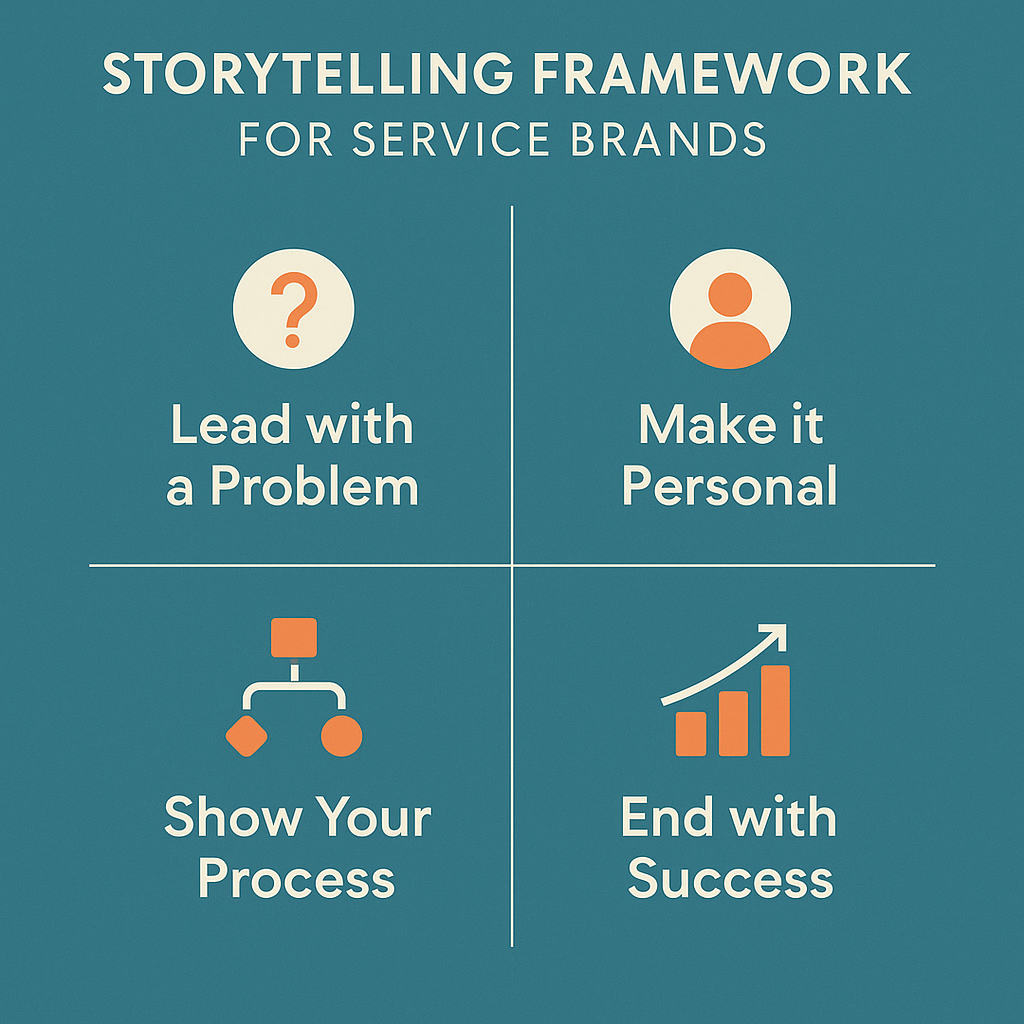
Turning Everyday Moments into Marketing Gold
Every satisfied customer has a story to tell—and service businesses have no shortage of real-world examples. A well-crafted testimonial or case story can outperform traditional ads because it offers proof through emotion.
Example: A Kansas City-based painting company once launched a social post showing a customer seeing their freshly renovated living room after months of delays. Their joy, not the paint color, became the story. Engagement skyrocketed, leading to referrals and repeat bookings.
Best Practices for Everyday Storytelling:
- Capture short video testimonials immediately after project completion.
- Create “day in the life” photo posts featuring your team at work.
- Use captions that show gratitude and highlight customer satisfaction.
Storytelling in Visual Form
Visuals are storytelling accelerators. Service businesses can use imagery to convey craftsmanship, reliability, and warmth faster than words.
Tips for Visual Storytelling:
- Use consistent brand colors and fonts on every platform.
- Feature real clients and staff—avoid stock imagery that feels generic.
- Document behind-the-scenes moments (team prep, quality checks, safety measures).
- Use short captions that emphasize transformation (“From leak to relief,” “From clutter to calm”).
The combination of emotion and authenticity helps viewers picture themselves in your story—and that’s when interest turns into inquiry.
The Role of Customer Voices in Storytelling
Your customers are your best marketers. Encouraging them to share experiences amplifies credibility. Create storytelling loops by inviting reviews, social tags, and short success features.
Real-World Example:
A local HVAC company in St. Louis invited customers to post short videos about “The first day my home finally stayed cool all summer.” The result? A flood of relatable, heartfelt clips that built engagement faster than paid ads.
Action Steps:
- Include a story prompt on your invoices or thank-you emails.
- Run a “Customer of the Month” spotlight campaign.
- Repost user-generated content and tag the customer (with permission).
Storytelling for Recruitment and Retention
Your story isn’t only for customers, it’s for your employees, too. Service businesses thrive when their teams believe in the mission. Use storytelling internally to build culture, pride, and consistency in how everyone represents the brand.
Internal Storytelling Ideas:
- Share team milestones and behind-the-scenes wins.
- Create an internal newsletter featuring staff testimonials or community impact stories.
- Use storytelling as a training tool to illustrate company values in action.
Using Storytelling to Elevate Word-of-Mouth Marketing
Word-of-mouth remains the strongest lead generator for local service providers. Storytelling magnifies that effect. When you give customers a narrative they can retell—something emotional, visual, and memorable—you transform passive satisfaction into active advocacy.
Framework for Shareable Stories:
- Keep it short (under two minutes or 150 words).
- Center the customer’s perspective.
- End with transformation or gratitude.
- Include visuals whenever possible.
Digital Storytelling and SEO Impact
Google now prioritizes E-E-A-T (Experience, Expertise, Authoritativeness, and Trustworthiness). Authentic storytelling supports each of these pillars. Blog posts, videos, and testimonials rich with local context improve search performance and trust signals.
Quick Wins for Local SEO Storytelling:
- Embed local keywords naturally into stories (“Kansas City homeowners,” “Grandview small businesses”).
- Use schema markup for testimonials on your site.
- Post regularly on Google Business Profile with story snippets.
When your story aligns with community values, algorithms and audiences both respond.
Measuring Storytelling Success
Storytelling isn’t guesswork, it’s measurable. Track how your stories perform using engagement metrics, inquiries, and repeat customers. Review comments for emotional resonance and note which stories generate calls or website visits.
Key Indicators of Success:
- Increase in referral leads.
- Higher social engagement rates.
- More website time-on-page and repeat visits.
- Qualitative donor or customer feedback expressing emotional connection.

From Service to Story to Standout Success
When service businesses embrace storytelling, they move beyond selling—they start serving on a deeper level. Your story becomes your signature. It builds trust, loyalty, and memorability long after the job is done.
Ready to elevate your storytelling from “content” to “connection”? Storytelling That Converts gives you the templates, tools, and guidance to make it happen.
For customized support, reach out to Vivid Creative Services—we help organizations tell stories that matter.