

The Vivid Perspective Series, Content & Storytelling That Connects – Part 4 of 4

Simplify the Chaos, Amplify the Impact
For small teams, creating consistent, high-quality content can feel like juggling five projects with three hands. Between managing client work, social media, emails, and blog updates, content creation often becomes reactive instead of strategic. The solution isn’t working harder—it’s working smarter with a content calendar designed for your team’s bandwidth, brand goals, and audience engagement rhythm. A well-built content calendar turns chaos into clarity, helping your organization stay consistent, creative, and connected.
Why Small Teams Need a Content Calendar
A content calendar isn’t just a spreadsheet—it’s your strategic roadmap. It ensures every post, article, or campaign has a purpose, a deadline, and a result. For small teams with limited time and resources, it’s the most efficient way to align marketing efforts, reduce duplication, and prevent burnout.
Key Benefits:
- Keeps your message consistent across all channels
- Simplifies team collaboration and accountability
- Highlights gaps in your content strategy
- Ensures alignment with key business goals or events
- Turns last-minute scrambling into proactive planning
- Small teams that plan outperform those that react. In marketing, predictability equals power.
Understanding What to Include in Your Calendar
Your content calendar should be both comprehensive and flexible, a tool that tracks content types, deadlines, and outcomes without overwhelming your workflow.
Essential Columns or Categories:
- Content Type – Blog, video, newsletter, social post, podcast, etc.
- Topic/Title – Working title or keyword focus.
- Goal/Purpose – Awareness, engagement, conversion, or retention.
- Owner – Who’s responsible for creation and approval.
- Publish Date – Target release timeline.
- Distribution Channel – Where it will be shared (website, LinkedIn, email).
- Status – Drafting, editing, scheduled, published.
- Performance Notes – Engagement, clicks, leads, or feedback.
By centralizing this information, your small team gains visibility and focus—two of the most valuable currencies in marketing.
Building Around Content Pillars
Every successful content strategy starts with content pillars, the main themes that represent your brand expertise and audience needs. These pillars guide your calendar, so every post serves a larger purpose.
Example for a Small Business:
- Brand Education: Tips, insights, and industry knowledge.
- Customer Stories: Testimonials or behind-the-scenes moments.
- Product/Service Highlights: Value-driven promotions.
- Community Engagement: Events, partnerships, or local initiatives.
Assign each week or month a specific focus area. This creates variety and balance while ensuring content consistency throughout the year.
Mapping Out Your Workflow
A calendar is only as effective as the process behind it. Define how ideas move from concept to publication and who touches each stage.
Simple Small-Team Workflow Example:
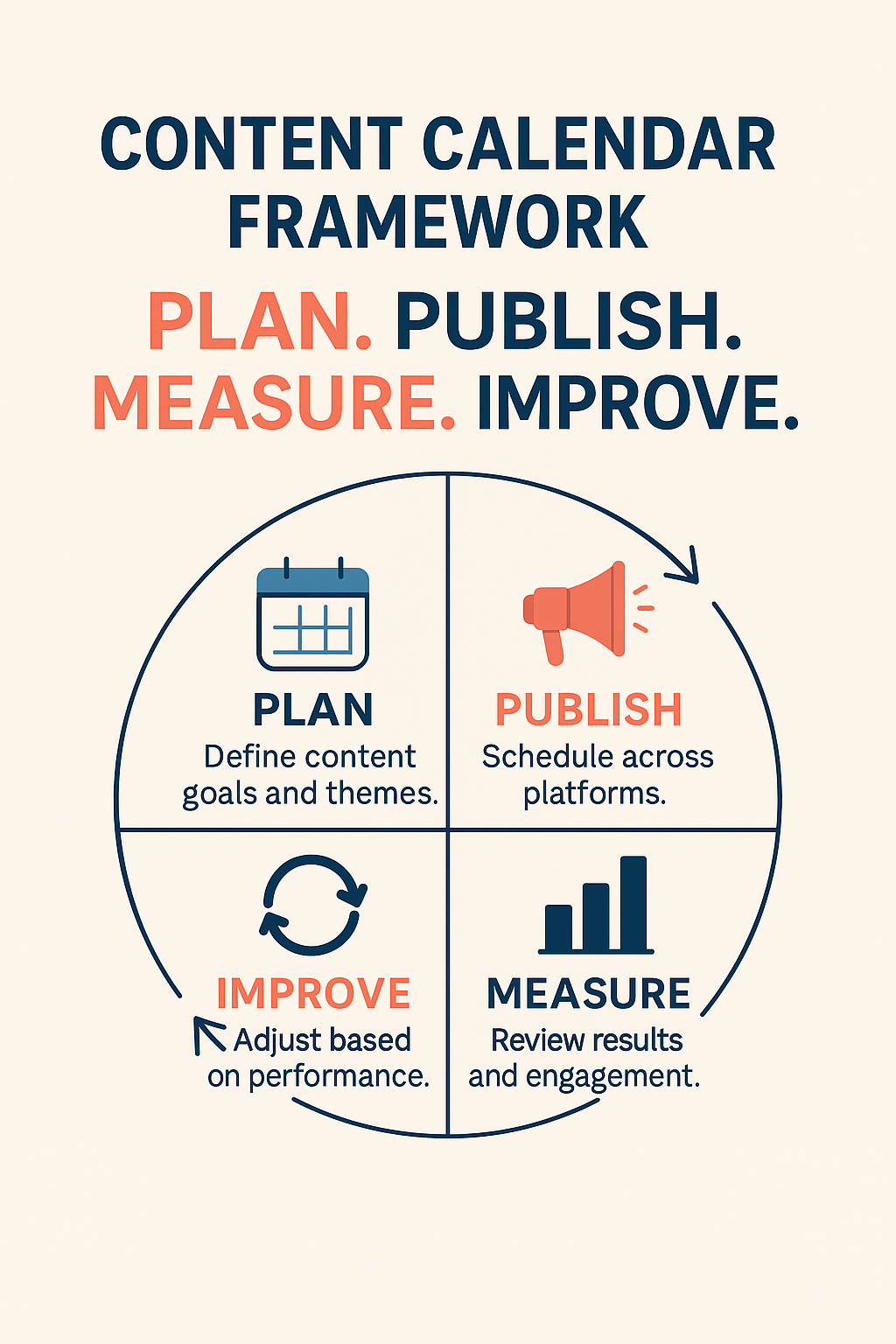
- Brainstorm: Choose topics aligned with monthly goals.
- Assign: Delegate tasks (even if it’s a two-person team).
- Draft: Create and edit collaboratively in shared tools.
- Schedule: Post across platforms using automation tools.
- Measure: Review analytics monthly and adjust strategy.
Using platforms like Google Sheets, Trello, or Notion can keep everyone in sync—without expensive software.
Balancing Creativity and Consistency
Small teams often fear that planning will stifle creativity. In reality, it does the opposite. A content calendar creates space for innovation because it eliminates guesswork. With deadlines and content categories already defined, you can focus your creativity on storytelling, visuals, and audience engagement rather than logistics.
Quick Tip: Use your calendar as a creative prompt. Add theme days like “Mission Monday,” “Behind-the-Scenes Wednesday,” or “Feature Friday” to keep content fresh and organized.
Managing Limited Resources Without Sacrificing Quality
When you’re a small team, time and energy are your most valuable assets. The key is to repurpose and recycle your content strategically.
Example Workflow:
- Turn a blog into three social posts, one infographic, and a newsletter highlight.
- Use quotes from client stories as testimonial graphics.
- Combine multiple social posts into an eBook or toolkit.
The goal is to make your best content work harder across multiple channels—without adding more work to your plate.
The Power of Batch Creation
Batching is your productivity superpower. Instead of creating content daily, set aside dedicated blocks of time for each stage—writing, designing, scheduling.
Batching Example for a Small Team:
- Week 1: Brainstorm and outline 4 blog posts.
- Week 2: Write and edit all 4 posts.
- Week 3: Create visuals and schedule distribution.
- Week 4: Measure and analyze results.
This approach increases consistency and reduces creative fatigue—two challenges that often derail small teams.
Using Tools to Stay Organized
You don’t need an enterprise system to manage your marketing calendar effectively. A combination of free or low-cost tools can streamline your process.
Recommended Tools:
- Google Sheets or Airtable: For visual planning and tracking.
- Canva: For designing branded graphics.
- Buffer or Later: For scheduling social media posts.
- Asana or Trello: For task management and accountability.
- Google Drive: For shared access to content assets and templates.
The best tool is the one your team will actually use consistently.
Measuring Success and Making Adjustments
Your calendar should evolve with your business. Review your analytics monthly or quarterly to understand what’s resonating with your audience.
Questions to Ask:
- Which type of content performs best?
- Are you posting too frequently or not enough?
- Which topics drive the most engagement or leads?
- What time of week/day gets the best response?
Continuous improvement is the hallmark of a sustainable content system.
Real-World Example: Turning Organization into Opportunity
A Kansas City–based health nonprofit with just two communications staff members struggled with last-minute social posts. After implementing a simple Trello-based content calendar, they scheduled a month of content in advance, increased consistency by 80%, and doubled engagement. The secret wasn’t hiring more people—it was having a plan.

Consistency Builds Credibility
For small teams, organization isn’t just operational—it’s strategic. A content calendar empowers your team to focus on what matters: creating content that builds trust, tells your story, and connects with your audience. When consistency meets creativity, growth follows.
Great storytelling doesn’t happen by accident—it happens by system. Get the full framework in Storytelling That Converts, your complete Playbook + Toolkit for crafting meaningful, measurable content.
If you want guided support applying these tools, connect with Vivid Creative Services today.