

The Vivid Perspective Series: Mid-Year Marketing Reset Edition; Part 1 of 5; Insights on Branding, Marketing & Storytelling
Mid-Year Marketing Reset for Small Businesses, Nonprofits & Public Organizations: Why This Moment Matters More Than You Think
There comes a point in every year when leaders pause—sometimes intentionally, sometimes out of necessity—and ask a critical question: Is what we’re doing actually working? Whether you’re leading a small business, nonprofit organization, school district, or local government agency, the mid-year mark presents a powerful opportunity to step back, evaluate your marketing performance, and make smarter, more strategic decisions for the months ahead. Many organizations push forward without reflection, hoping momentum alone will deliver results, but the most successful brands understand that growth requires recalibration. A mid-year marketing reset is not about starting over—it’s about refining what’s already in motion to drive stronger outcomes. This is the moment to shift from reactive execution to intentional strategy. When approached correctly, a mid-year reset becomes the difference between finishing the year uncertain and finishing the year with clarity, confidence, and measurable success.
Before we explore how to reset your strategy, it’s important to understand why mid-year is such a critical inflection point for your marketing performance.

Why a Mid-Year Marketing Recalibration Is Essential for Performance, ROI, and Growth
By the time June arrives, your organization has already generated six months of valuable data—campaign performance, audience engagement, budget spend, and conversion insights that tell a story about what’s working and what’s not. The challenge is that many organizations either ignore this data or don’t know how to interpret it effectively. This is where a structured marketing recalibration becomes essential. Instead of waiting until the end of the year to evaluate success, mid-year allows you to make real-time adjustments that can significantly impact your results. Focusing on the right KPIs is essential to understanding whether your marketing is truly driving results. For example, a small business may discover that its social media campaigns are driving engagement but not conversions, while a nonprofit may realize that donor messaging is not resonating with its intended audience. These insights are not failures—they are opportunities. When you take time to recalibrate, you reposition your organization to maximize ROI, improve messaging clarity, and align your marketing efforts with your most important goals. The organizations that win in the second half of the year are the ones that are willing to pause, analyze, and act with intention.
So, what are leaders actually struggling with at this stage of the year? Let’s address the most common questions and challenges organizations face during a mid-year marketing review.
Top 25 Mid-Year Marketing Questions Leaders Are Asking Right Now (And What They Reveal About Your Strategy)
At Vivid Creative Services, we consistently hear the same concerns from leaders across industries, and these questions reveal deeper strategic gaps that need attention. These are not just tactical questions, they are signals that your strategy needs clarity, alignment, or refinement.
Performance & ROI
- How do I know if my marketing is working?
- What metrics actually matter mid-year?
- Why am I getting engagement but no conversions?
- How do I measure ROI across multiple channels?
- What should I stop doing immediately?
Strategy & Direction
- Should I change my strategy mid-year?
- Is it too late to fix my marketing this year?
- What should I prioritize for the next 6 months?
- How often should I review my strategy?
- What does a successful reset actually look like?
Audience & Messaging
- Am I targeting the right audience?
- Why isn’t my message connecting?
- How do I refine my value proposition?
- Should I change my brand messaging mid-year?
- How do I reach new audiences without losing my current base?
Budget & Resources
- Am I spending my marketing budget in the right places?
- How do I reallocate budget mid-year?
- What channels give the best ROI right now?
- Should I invest more in digital or traditional marketing?
- How do I market effectively with a limited budget?
Execution & Growth
- What should I do more of in the second half of the year?
- How do I turn insights into action?
- How do I improve consistency in marketing?
- What quick wins can I implement right now?
- When should I bring in outside marketing expertise?
These questions are not a sign of failure—they are a sign that your organization is ready to grow. Addressing them directly allows you to move from uncertainty to clarity and from activity to strategy.
What This Means for You: If you’re asking these questions, you’re in the exact position where strategic organizations begin to gain a competitive advantage—by choosing clarity over guesswork.
Now that we understand the challenges, let’s define what a successful mid-year marketing reset actually looks like in practice.
What a Strategic Mid-Year Marketing Reset Actually Looks Like (Beyond a Simple Review)
A true mid-year marketing reset goes far beyond reviewing numbers—it is a structured process that aligns your strategy, messaging, audience, and budget with your organizational goals. It begins with an honest assessment of your current performance, followed by a clear understanding of where adjustments are needed. This may include refining your target audience, improving your messaging, reallocating your marketing budget, or optimizing your marketing channels. As we highlighted in our Content That Converts: Turning Blog Posts into Client Leads article (Click here to review), effective marketing is not just about visibility—it’s about creating meaningful connections that drive action. For example, a local service business might shift its focus from broad awareness campaigns to more targeted, conversion-driven strategies, while a school district may refine its messaging to better connect with prospective families. The reset also requires prioritization—identifying the initiatives that will have the greatest impact in the second half of the year. This is not about doing more; it’s about doing what matters most.
To help guide this process, we leverage a structured system that simplifies evaluation and decision-making.
Using a Proven System: How the Year-End Marketing Playbook Becomes a Mid-Year Advantage
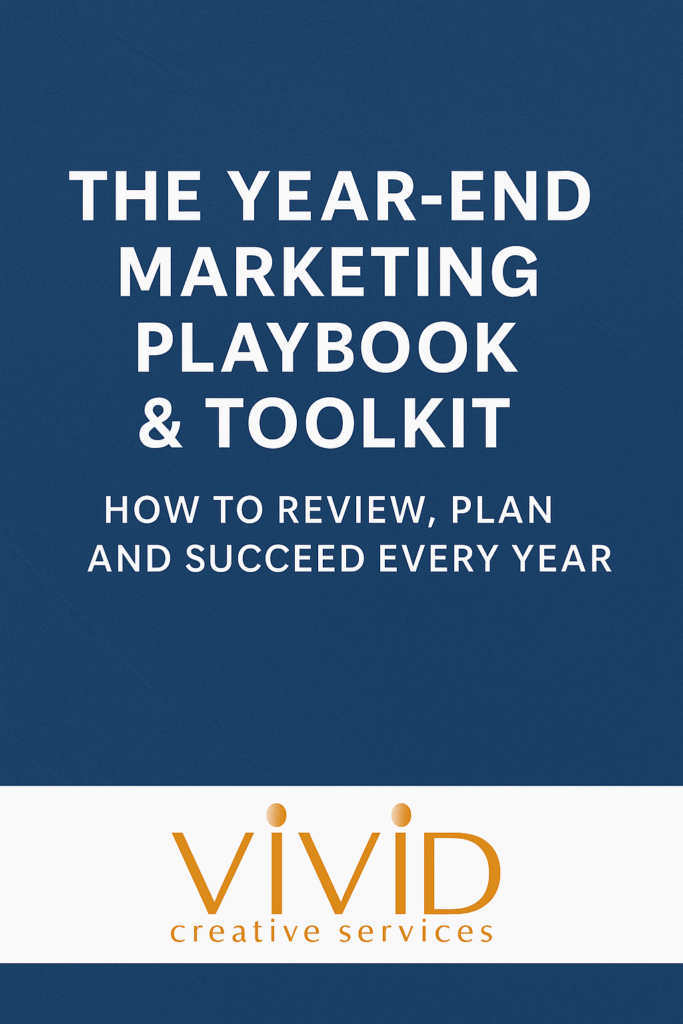
One of the most effective ways to approach a mid-year reset is by using a proven framework, and this is where the Year-End Marketing Playbook & Toolkit: How to Review, Plan and Succeed Every Year (Link) becomes a powerful asset. While originally designed for year-end planning, the principles within the Playbook are equally valuable at mid-year because they focus on structured evaluation, strategic alignment, and forward planning. By applying this system now, you gain the advantage of making informed adjustments before the year ends. Strong marketing performance is not just about activity, it’s about alignment between your strategy, messaging, and measurable outcomes. For example, a nonprofit may use the Playbook to refine donor engagement strategies, while a small business may identify opportunities to improve lead generation and customer conversion. Strategy is not seasonal, it is continuous.
What This Means for You: You don’t need to wait until year-end to think strategically. The same system that drives long-term success can transform your performance right now.
Now let’s focus on the key areas you should evaluate to ensure your reset is both effective and impactful.
The Four Critical Areas to Evaluate During Your Mid-Year Marketing Review
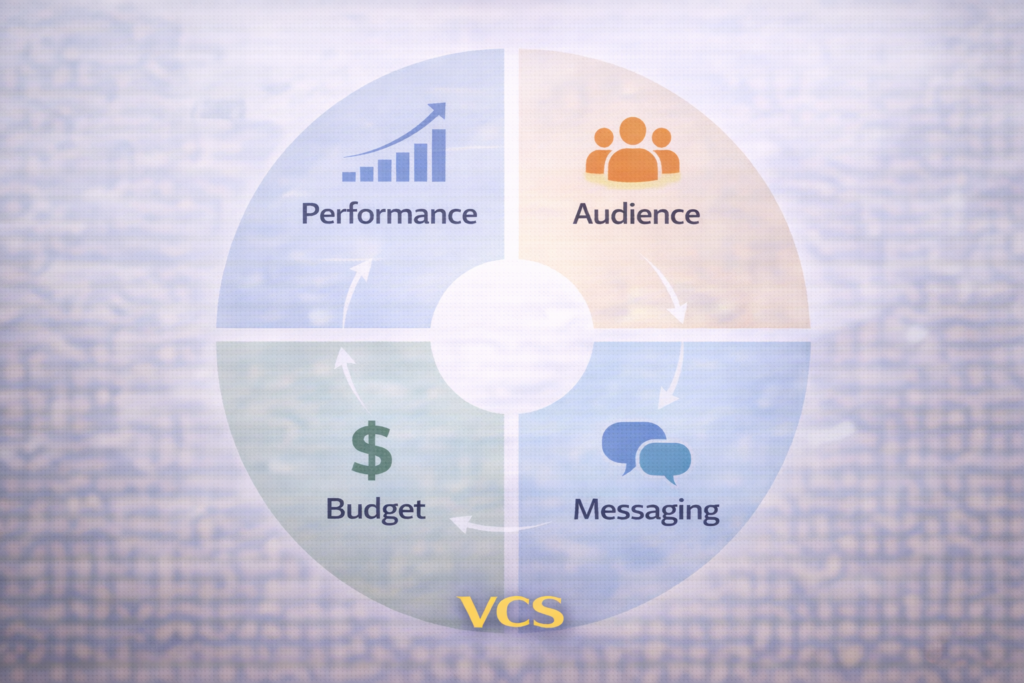
When conducting a small business marketing review or nonprofit midyear planning session, there are four core areas that require focused attention: performance, audience, messaging, and budget. Performance metrics help you understand what is working, while audience analysis ensures you are reaching the right people. Messaging clarity determines whether your value proposition resonates, and budget allocation reveals whether your resources are being used effectively. If visibility is a concern, revisiting foundational strategies like those outlined in our SEO Basics for Organizations Under $25M in Revenue article (Click here to review) can strengthen your discoverability and reach. For example, a local government agency may find that its outreach efforts are not connecting with underserved communities, while a small business may discover that its ad spend is concentrated on underperforming channels. Each of these insights provides a clear opportunity for improvement.
What This Means for You: Focus on these four areas, and you’ll uncover the insights needed to make smarter, more impactful decisions.
Once you’ve identified what to evaluate, the next step is turning those insights into meaningful action.
From Insight to Action: Turning Data Into Strategic Marketing Decisions That Drive Results
Data without action is one of the most common pitfalls in marketing, and a mid-year reset provides the perfect opportunity to close that gap. Once you’ve gathered insights, the next step is to translate them into clear, actionable decisions. This may involve reallocating your budget toward high-performing channels, refining your messaging, or adjusting your strategy to align with evolving goals. For example, a nonprofit may shift its focus from awareness to donor engagement, while a small business may invest more in local SEO or paid advertising to increase visibility. The key is to prioritize actions that will deliver measurable impact. This requires focus, discipline, and a willingness to make strategic adjustments that move your organization forward.
To support this process, we’ve developed a simple yet powerful tool to guide your next steps.
Download Your Mid-Year Marketing Reset Checklist: A Simple Tool to Take Immediate Action
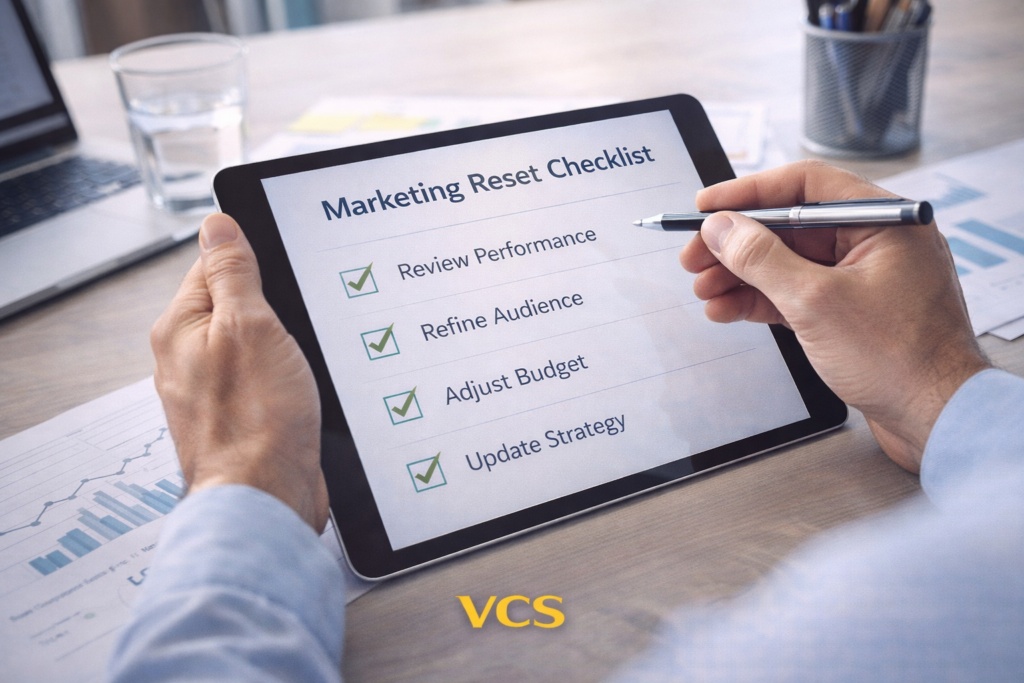
To make this process easier, we recommend using a Mid-Year Marketing Reset Checklist—a practical tool designed to guide your evaluation and action planning. This checklist is designed to give you a quick, high-level view of where your marketing stands today—so you can identify immediate opportunities for improvement before diving deeper into a full marketing audit. In the next article in this series, Marketing Audit Checklist: How to Evaluate Your Strategy in 5 Simple Steps (Link) we’ll walk through a detailed checklist that takes this process further, helping you evaluate your strategy step-by-step with greater depth and precision.
👉 Download the Mid-Year Marketing Reset Checklist (Link)
👉 Explore the Year-End Marketing Playbook & Toolkit (Link)
👉 Schedule a Discovery Session with Vivid Creative Services (Link)
Mid-Year Marketing Reset FAQ: Quick Answers to Common Questions
A mid-year reset often raises important questions.
When should I reset my marketing strategy? Mid-year is ideal, but any time you have performance data is an opportunity.
Should I completely change my strategy? Not always—most organizations benefit from refinement rather than reinvention.
What metrics matter most? Focus on those tied directly to your goals, such as conversions and engagement.
How long does a marketing audit take? It varies, but even a simple review can uncover valuable insights.
These answers provide clarity and help you move forward with confidence.
Reset Now, Refocus Your Strategy, and Finish the Year Strong
A mid-year marketing reset is not just a strategic exercise—it is a leadership decision that positions your organization for success. By evaluating your performance, refining your strategy, and taking intentional action, you create a clear path forward. The organizations that finish strong are not the ones that avoid challenges; they are the ones that address them with clarity and confidence. Now is the time to reset, refocus, and move forward with purpose.
At Vivid Creative Services, we help organizations turn uncertainty into strategy and strategy into results.