

Digital Marketing Strategies – Part 2 of 4
The Power of the Inbox: Why It Still Works
In an era of ever-changing algorithms and fleeting social trends, email marketing remains a tried-and-true digital strategy that consistently delivers results. Unlike social media, where you rent space on someone else’s platform, email gives you a direct and personal line to your audience. And when executed properly, it delivers one of the highest returns on investment (ROI) in all of digital marketing. But success in email marketing doesn’t come from simply having a list—it comes from building a list of people who actually want to hear from you and then delivering content that inspires them to act. Whether you’re a small business owner, a nonprofit director, or a solo entrepreneur, understanding how to build a list that converts is key to long-term marketing success.
The Value of an Intentional Email List
All email lists are not created equal. A large list of disengaged recipients won’t drive results—but a smaller list of motivated subscribers can have a significant impact on your bottom line. The goal is to grow a qualified, permission-based list of people who have opted in because they find value in what you offer. This starts with a clear value proposition: What will your audience gain by signing up? Whether it’s exclusive access to deals, helpful resources, or insightful content, your opt-in offer should align with the needs and interests of your ideal customer.
Using tactics like lead magnets (downloadable guides, checklists, or toolkits), event sign-ups, and newsletter subscriptions can help grow your list organically. Just as importantly, be transparent about how you’ll use their email address and make unsubscribing easy. Respect builds trust—and trust leads to higher open and conversion rates over time.
Tools and Tactics for Growing Your Email List
There are a variety of digital tools and tactics that can simplify and strengthen your list-building efforts. Start with a reliable email marketing platform such as Mailchimp, Constant Contact, or ConvertKit. These tools allow you to create attractive sign-up forms, automate welcome emails, and segment your audience based on interests or behaviors. Adding a pop-up form to your website, embedding a sign-up form in your blog or footer, and including a call-to-action in your social media profiles are great ways to increase visibility for your list.
Offline methods matter too. Collect email addresses at events, speaking engagements, or in-store visits—just be sure to get consent and explain what kind of communication they can expect. Another underused strategy is content upgrades—bonus materials offered in exchange for subscribing. For example, if someone reads a blog on branding, offer a free branding checklist in exchange for their email. Small value-adds like this can go a long way in growing a relevant, engaged list.
Crafting Emails That Convert
Once someone joins your list, the real work begins. The welcome email sets the tone for your relationship, so make it count. Let subscribers know what kind of content they can expect and how often they’ll hear from you. From there, your email strategy should balance useful content with strategic calls-to-action. Educational emails, behind-the-scenes looks, customer spotlights, and exclusive offers can keep your audience interested and engaged.
To improve your email conversion rate, follow a few proven principles:
- Use clear and compelling subject lines that create curiosity or urgency.
- Personalize emails using the recipient’s name and segment your list based on interests or behaviors.
- Keep your emails visually clean and mobile-friendly.
- Include only one primary call-to-action (CTA) per email to avoid confusion.
- Finally, monitor your analytics. Open rates, click-through rates, and unsubscribe rates tell you what’s working and what needs adjustment. A/B testing different subject lines or CTAs can yield surprising results and uncover what resonates best with your audience.
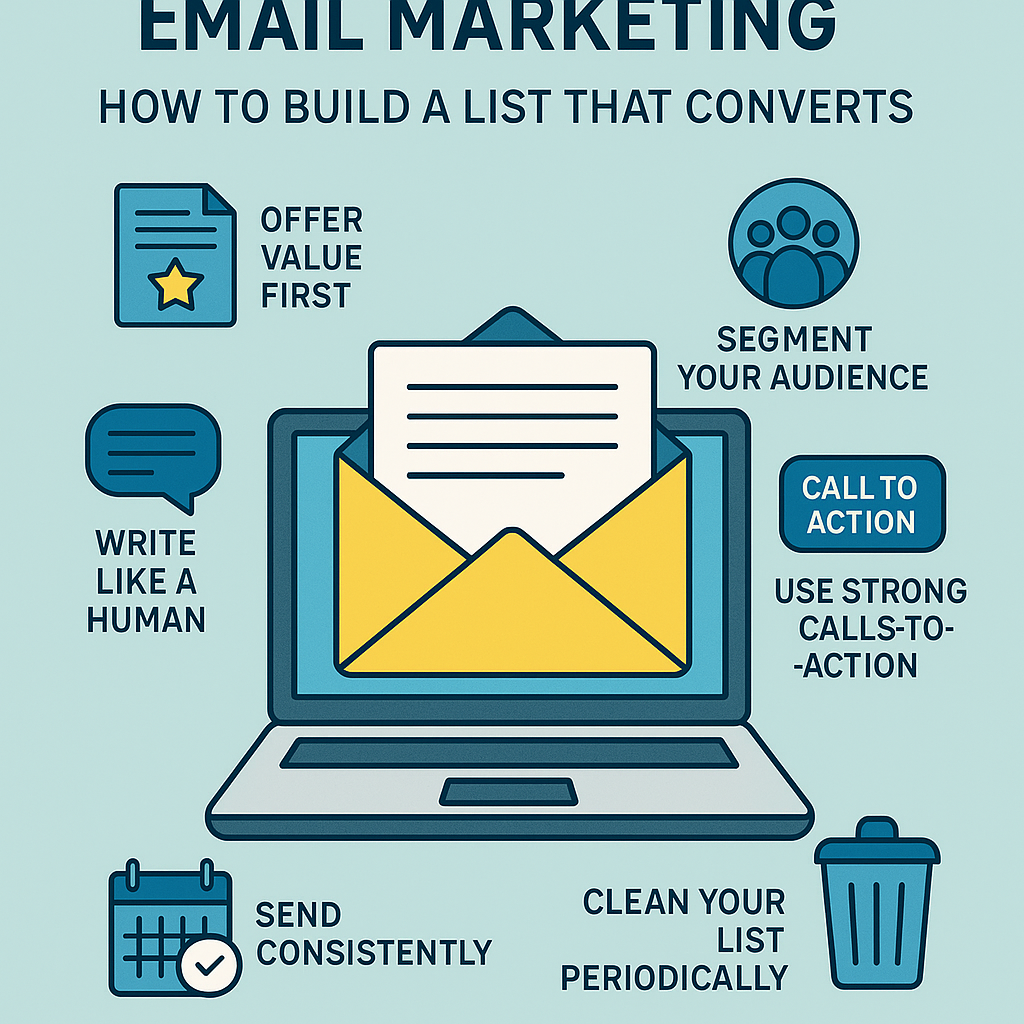
6 Ways to Boost Your Email List Conversion Rate
1. Offer Value First – Provide a lead magnet or free resource that directly solves a problem for your audience. People are more likely to share their email when they receive immediate value.
2. Segment Your Audience – Not every subscriber is interested in the same thing. Use tags and segments to send more relevant emails that speak to individual interests and behavior.
3. Write Like a Human – Use a friendly, conversational tone and avoid overly salesy language. People respond better to brands that feel personal and approachable.
4. Use Strong Calls-to-Action – Every email should have one clear next step—whether it’s reading a blog post, signing up for a webinar, or making a purchase.
5. Send Consistently, But Don’t Overwhelm – A regular cadence (weekly or biweekly) keeps your brand top of mind without fatiguing your audience.
6. Clean Your List Periodically – Remove unengaged subscribers who haven’t opened an email in 3–6 months. A healthy list performs better and reduces spam risk.
Make Email Work for You—One Click at a Time
Email marketing is not about blasting messages to the masses. It’s about building relationships, nurturing trust, and guiding your audience toward meaningful action. With the right list-building techniques, engaging content, and strategic follow-up, your emails can become one of the most cost-effective tools in your digital arsenal.
Don’t just grow a list—build relationships that drive results. Get the Digital Marketing Works Playbook & Toolkit today.
📘 Grab the Playbook to access lead magnet planners, welcome sequence templates, and opt-in best practices, or 🤝 Partner with Vivid Creative Services to strengthen your email strategy and conversions.