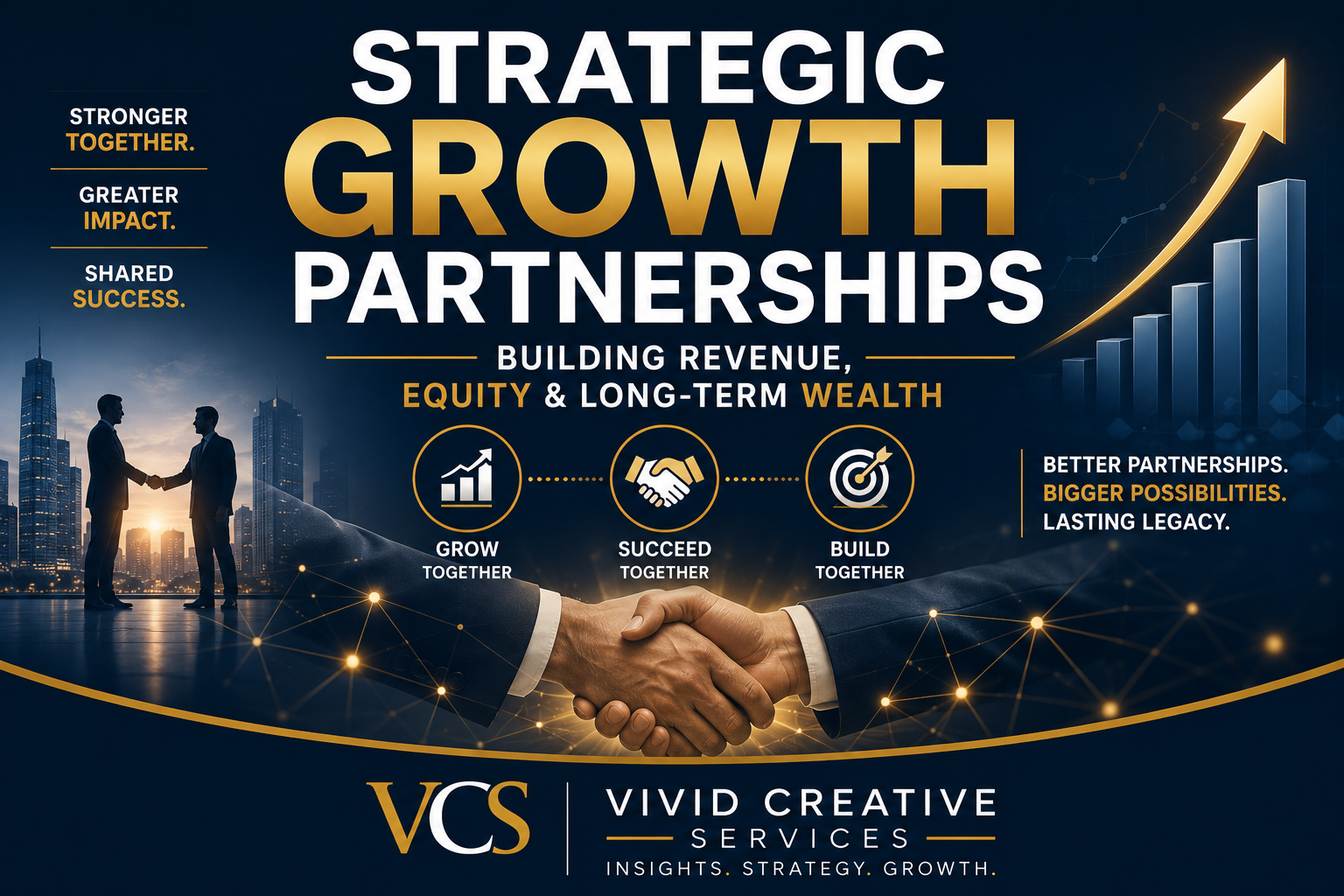

The Vivid Perspective Series: Insights on Branding, Marketing & Storytelling; Marketing Leadership for Growth: How Smart Organizations Scale with Strategy, Not Just Execution; Part 4 of 4
Growth Doesn’t Have to Be Built Alone
For many organizations, growth is viewed as a function of internal effort—more marketing, more sales, more hiring, and more resources. While these elements are important, they are not the only path to expansion. In fact, some of the most effective and sustainable growth strategies are built through collaboration. Strategic growth partnerships allow organizations to leverage shared resources, aligned audiences, and complementary expertise to accelerate results. Instead of carrying the full weight of growth alone, partners work together to create outcomes that would be difficult to achieve independently. This shift from isolation to collaboration opens the door to new opportunities, increased efficiency, and long-term value creation.
Who This Matters For: Leaders Focused on Growth, Scale, and Opportunity
Strategic growth partnerships are particularly valuable for leaders who are thinking beyond short-term gains and looking to build sustainable, scalable success. Whether you are a small business owner seeking to expand your reach, a nonprofit leader aiming to deepen community impact, or a professional service firm exploring new revenue streams, partnerships can play a critical role in achieving your goals. Private equity-backed companies, healthcare organizations, and educational institutions also benefit from collaborative models that enhance efficiency and extend capabilities. These leaders recognize that growth is not just about doing more, it is about doing better, together. Understanding how to structure and leverage partnerships is a key component of modern leadership.
What Strategic Growth Partnerships Actually Are (and What They Are Not)
Strategic growth partnerships are intentional, mutually beneficial relationships designed to achieve specific outcomes. They go beyond referrals or informal collaborations, focusing instead on aligned goals, shared value, and measurable impact. These partnerships can take many forms, including co-marketing initiatives, joint ventures, service collaborations, and equity-based arrangements. What they are not is transactional or short-term. Effective partnerships are built on trust, clarity, and a shared vision for success. Without these elements, partnerships can become misaligned and ineffective. With them, they become powerful drivers of growth and innovation.
The 5 Types of Strategic Growth Partnerships That Drive Results
There are several partnership models that organizations can leverage depending on their goals and resources.
- First, Referral Partnerships create opportunities to exchange qualified leads between trusted organizations.
- Second, Co-Marketing Partnerships involve joint campaigns that expand reach and visibility. Third, Service-Based Partnerships allow organizations to bundle complementary offerings, increasing value for clients.
- Fourth, Joint Ventures involve deeper collaboration on shared initiatives or new business opportunities.
- Finally, Equity Partnerships align long-term incentives by sharing ownership or revenue.
Each model offers unique advantages, and selecting the right approach depends on your objectives and level of commitment. Understanding these options allows leaders to explore partnerships with intention and clarity.
25 Questions Leaders Ask About Strategic Partnerships
As organizations begin to explore partnerships, a range of important questions often emerge. How do we find the right partners? What should we look for in alignment? How do we structure agreements? What are the risks involved? How do we measure success? How do we ensure accountability? What level of commitment is required? How do we protect our brand? How do we share revenue or equity fairly? These questions reflect the complexity of partnerships and the importance of thoughtful planning. Addressing them requires a strategic approach that balances opportunity with risk. When leaders take the time to evaluate these considerations, they are better positioned to build partnerships that deliver meaningful results.
What This Looks Like in the Real World
Consider a service-based business looking to expand its client base without significantly increasing its marketing budget. Instead of investing solely in additional campaigns, the business forms a partnership with a complementary service provider that serves a similar audience. Together, they create bundled offerings and co-market their services, providing greater value to clients while sharing resources. Over time, both organizations benefit from increased visibility, higher-quality leads, and improved conversion rates. In another example, a consulting firm enters into an equity partnership with a growing company, aligning long-term incentives and contributing strategic expertise in exchange for a share of future success. These examples illustrate how partnerships can unlock opportunities that extend beyond traditional growth strategies.
How Strategic Marketing and Leadership Enable Strong Partnerships
Effective partnerships do not happen by chance; they require clear strategy and strong leadership. As discussed in our previous articles, marketing leadership and strategic alignment are foundational to growth. In “Marketing Leadership vs Execution,” we explored the importance of direction. In “Strategic Marketing Planning,” we emphasized alignment. And in “Fractional CMO vs In-House Marketing,” we addressed structure. Partnerships build on all three. Without clarity, alignment, and leadership, partnerships lack direction and struggle to deliver results. With them, organizations are able to identify the right opportunities, communicate value effectively, and manage relationships with confidence. This connection reinforces the idea that partnerships are not separate from strategy—they are an extension of it.
The Shift from Revenue Thinking to Wealth Building
One of the most powerful aspects of strategic partnerships is their ability to move organizations beyond transactional revenue toward long-term wealth creation. Traditional models focus on immediate returns—closing deals, generating leads, and increasing sales. While these are important, partnerships introduce the possibility of shared growth, recurring revenue, and equity participation. This shift requires a different mindset, one that values collaboration, patience, and long-term vision. Leaders who embrace this approach are better positioned to build sustainable success that extends beyond individual transactions. Partnerships become not just a growth strategy, but a wealth-building strategy.
How to Identify and Build the Right Partnerships
Building effective partnerships begins with clarity around your own goals, strengths, and value proposition. Identify organizations that serve a similar audience but offer complementary services. Evaluate alignment in terms of values, objectives, and expectations. Establish clear agreements that define roles, responsibilities, and success metrics. Start with smaller initiatives to build trust and refine the relationship before expanding. Maintain open communication and regularly assess performance to ensure alignment. This process requires intentionality and discipline, but the rewards can be significant. When done correctly, partnerships become a reliable and scalable source of growth.
A Strategic Approach to Growth: Beyond Traditional Marketing
At Vivid Creative Services, we view growth through a broader lens—one that extends beyond traditional marketing tactics. As a Certified fCMO+ Advisor, we bring a structured, strategic approach to helping organizations identify and capitalize on growth opportunities. Through our Vivid Strategy First philosophy, we begin by developing a Strategic Marketing Blueprint that aligns your goals, audience, and positioning. From there, we explore opportunities for collaboration, partnerships, and strategic expansion that support long-term success.
In many cases, this includes identifying potential partnership opportunities, structuring agreements, and aligning marketing efforts to support shared goals. Whether through leadership guidance, fractional CMO support, or hands-on implementation, our focus is on helping organizations build smarter, more sustainable growth strategies. Partnerships are not an afterthought—they are a core component of a comprehensive growth plan.
Continue the Leadership & Strategic Marketing Series
If you’ve followed this series, you’ve seen how each element builds on the last:
👉 Start Here: Marketing Leadership vs Execution: Why Your Organization Is Stuck (and How to Fix It) – LINK
👉 Then Read: Strategic Marketing Planning: How to Align Business Goals, Brand Growth, and Revenue – LINK
👉 Then Explore: Fractional CMO vs In-House Marketing: The Smartest Way to Scale Without Overhiring – LINK
Together, these insights create a clear path from awareness, to alignment, to execution, and now to growth through collaboration.
Take the Next Step Toward Strategic Growth
If you are ready to explore new ways to grow your organization, now is the time to think beyond traditional approaches. Start by completing the Marketing Leadership Scorecard to assess your current position and identify opportunities for improvement (Click here to get the scorecard). From there, consider scheduling a Marketing Leadership Discovery Session with Vivid Creative Services (LINK). Together, we can explore your goals, evaluate potential partnership opportunities, and develop a strategy that supports both revenue and long-term wealth creation. Growth is not just about what you build—it is also about who you build it with.
MICRO FAQ
What are strategic growth partnerships?
They are intentional collaborations between organizations designed to achieve shared goals and drive mutual growth.
What types of partnerships are most common?
Referral, co-marketing, service-based, joint ventures, and equity partnerships.
How do partnerships create revenue?
By expanding reach, sharing resources, and creating new opportunities for collaboration.
What is an equity partnership?
A partnership where organizations share ownership or revenue in exchange for long-term collaboration.
Are partnerships right for small businesses?
Yes, partnerships can provide scalable growth opportunities without requiring significant upfront investment.