
The Vivid Perspective Series, 2025 ReCap & Planning Ahead, Part 1 of 4
The First Step to Smarter Marketing: Measuring What Matters
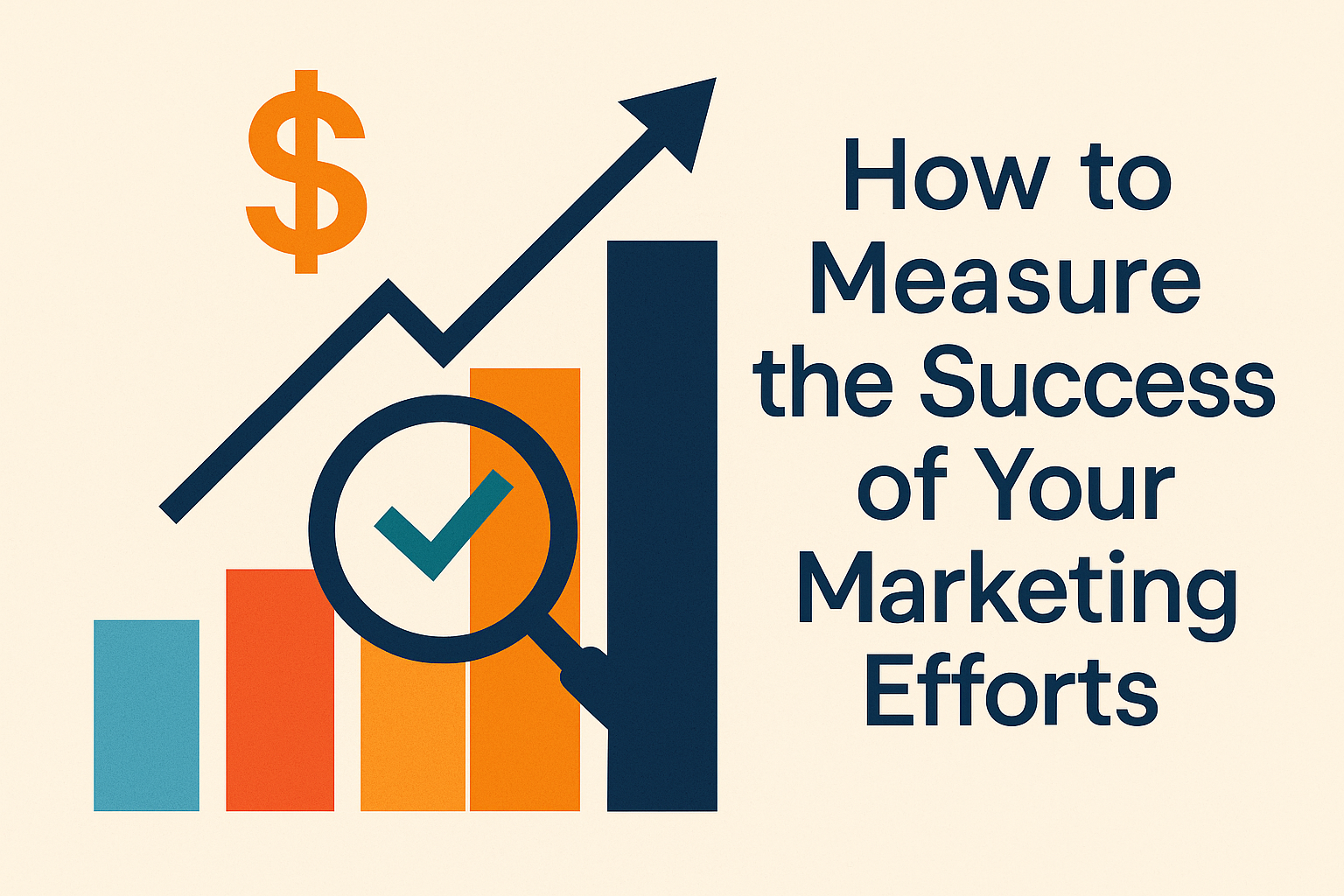
Every marketing initiative, whether a small social media campaign or a multi-channel strategy, should answer one fundamental question: Is it working? Measuring the success of your marketing efforts goes beyond tracking vanity metrics like likes or impressions. True marketing success is defined by performance metrics and return on investment (ROI) that directly connect to business growth. Yet, many businesses and nonprofits struggle with identifying the right measurements or using them consistently. By building a framework of clear, actionable performance metrics, you can transform your marketing from a cost center into a measurable growth driver.
The Importance of Measuring Marketing Success
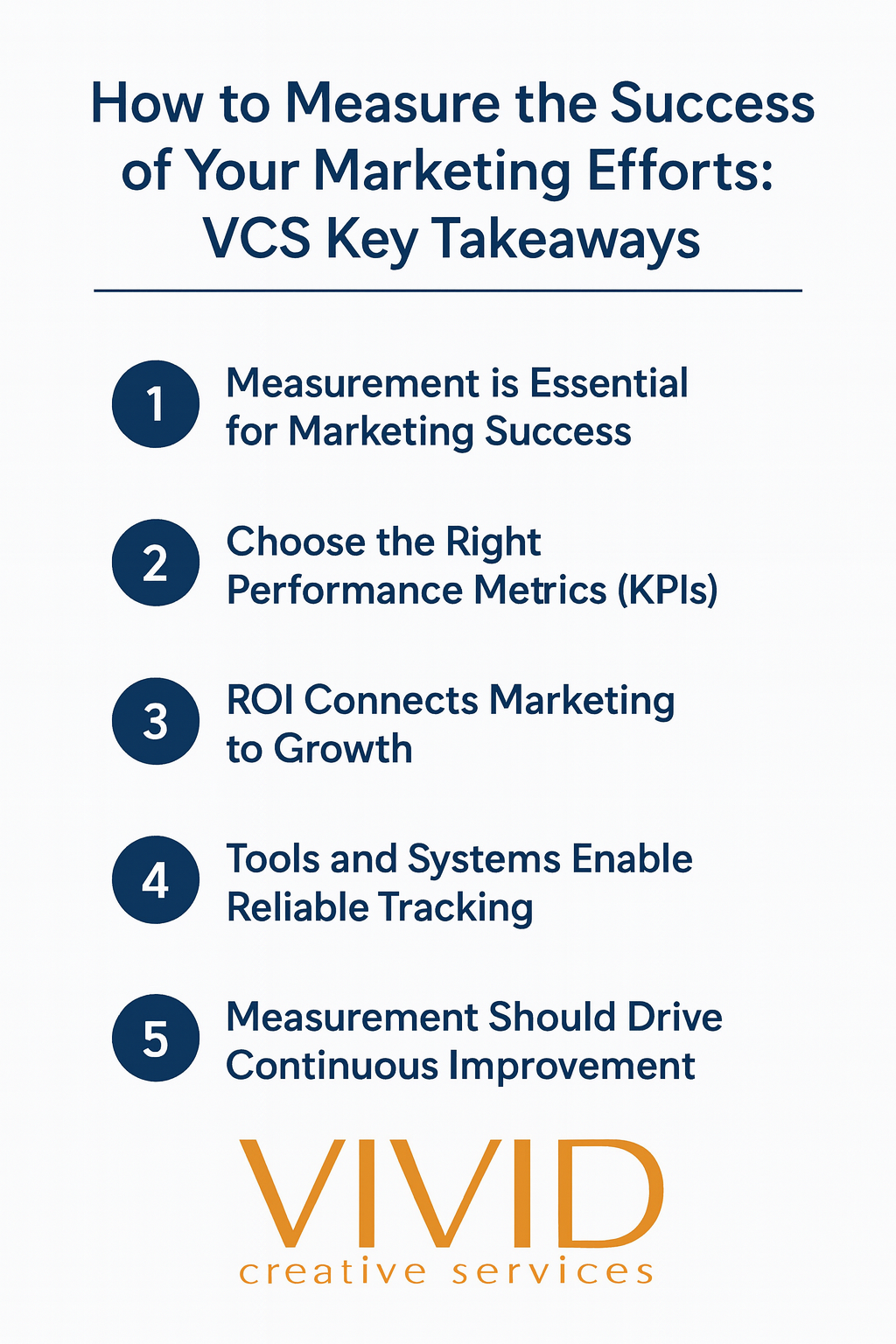
Marketing without measurement is like driving without a roadmap—you might move forward, but you won’t know if you’re headed in the right direction. Success in marketing requires setting clear benchmarks that tie directly to your organizational objectives. For example, if your goal is to increase enrollment in a local government program, tracking awareness metrics alone won’t provide insight into whether residents are actually signing up. Instead, conversion metrics must be front and center. Measurement also helps identify weak spots in your campaigns, allowing for adjustments before more resources are wasted. The organizations that consistently measure success are those that continually improve performance and maximize marketing ROI.
Identifying the Right Performance Metrics
Not all performance metrics are created equal, and the key to meaningful measurement lies in choosing the right ones. Metrics should be directly aligned with your objectives, whether that’s increasing sales, driving donations, or building community engagement. For example, a nonprofit focused on donor retention should measure repeat donation rates and donor lifetime value, while a small business retailer may focus on cost-per-acquisition and average order value. Organizations that chase every available metric often dilute their focus, wasting time on numbers that don’t inform decision-making. By carefully selecting key performance indicators (KPIs), you establish a clear lens through which to view marketing success.
Calculating and Understanding Marketing ROI
Return on investment is one of the most critical measurements of marketing success, yet it is often misunderstood. At its simplest, ROI measures the revenue generated compared to the costs invested in a campaign. For example, if you spend $10,000 on a campaign that drives $40,000 in revenue, your ROI is 300%. But ROI goes beyond raw numbers; it reflects whether your marketing dollars are contributing to business growth. For nonprofits, ROI can also be measured in mission-driven outcomes, such as cost per program enrollment. A local government agency may measure ROI through cost savings from increased digital adoption of services. Understanding ROI allows leaders to justify budgets, optimize tactics, and demonstrate marketing’s value to stakeholders.
Tools and Systems for Tracking Success
Even the most well-thought-out metrics and ROI formulas are useless without the right tools in place to track them. Today’s marketing technology stack offers solutions for organizations of all sizes. Google Analytics, HubSpot, Salesforce, and Mailchimp are widely used platforms that help collect and analyze data. Nonprofits often use donor management systems like Bloomerang or Neon One to track fundraising results, while local governments may use digital dashboards to measure community engagement. The key is integration—ensuring your systems work together to provide a complete view of the customer journey. A fragmented approach can leave gaps in your data and mislead your decision-making. Consistent tracking enables organizations to build reliable benchmarks year over year.
Real-World Examples of Measuring Marketing Success
Case studies demonstrate how performance metrics transform organizations. Consider a mid-sized nonprofit that wanted to improve donor retention. By tracking repeat donor metrics, they discovered that their follow-up communications were inconsistent. After implementing an automated email nurture sequence, retention increased by 18% in one year, proving the ROI of their investment in automation software. Similarly, a small business retailer used Google Analytics to measure traffic sources and learned that social media was driving less than 5% of sales. By shifting advertising dollars toward email marketing, which accounted for 25% of sales—the company increased overall revenue by $200,000. These examples highlight how aligning metrics with goals directly informs smarter resource allocation.
Turning Measurement Into Continuous Improvement
Measuring marketing success should never be a one-time exercise at year-end; it must become part of an ongoing cycle of continuous improvement. Regularly reviewing metrics allows teams to identify what’s working, scale successful tactics, and cut underperforming ones. For businesses, quarterly reviews can ensure alignment with revenue goals. Nonprofits can use measurement to justify grant applications and donor appeals with evidence-based outcomes. Local governments can improve community trust by showing how marketing campaigns increase participation in civic programs. By embedding a culture of measurement into your marketing, you not only improve ROI but also strengthen your organization’s reputation as a strategic, results-driven leader.
Turning Insights Into Action for 2026
The ability to measure marketing success is no longer optional—it’s essential for growth, credibility, and sustainability. By focusing on the right performance metrics, calculating ROI, leveraging tools, and applying insights to improve, organizations can ensure their marketing efforts drive meaningful impact. The year ahead offers the perfect opportunity to shift from guesswork to evidence-based strategy. As you plan your 2026 marketing, ask yourself: Are you tracking the right metrics, and do you have the systems in place to measure ROI?
Don’t just track — transform your data into strategy. Get the Year-End Marketing Playbook + Toolkit to evaluate your performance with clarity, identify what’s driving results, and plan smarter for next year.
If you’d like support interpreting your metrics and turning insight into action, connect with Vivid Creative Services for a customized strategy session.