

Part 1 of 5:“Beyond the Cup: How Local Businesses Can Score Big with World Cup Visitors”
A Golden Opportunity That’s Easy to Miss
In June and July 2026, millions of fans will pour into North America to attend FIFA World Cup matches across 16 cities, including Kansas City, Miami, Los Angeles, Toronto, and Mexico City. For local businesses, this is not just a moment—it’s a once-in-a-generation marketing opportunity. Yet, while stadiums buzz with energy and international guests fill nearby hotels, far too many local establishments will remain invisible to these potential customers. Why? Because without intentional strategy, small and mid-sized businesses miss the chance to connect, engage, and build long-lasting relationships with out-of-town guests. In this first post of our 5-part series, we explore the top reasons local businesses struggle to reach World Cup visitors and what can be done to turn these missed connections into meaningful encounters that extend beyond the final whistle.
Barrier 1: Lack of Local Visibility in Digital Spaces
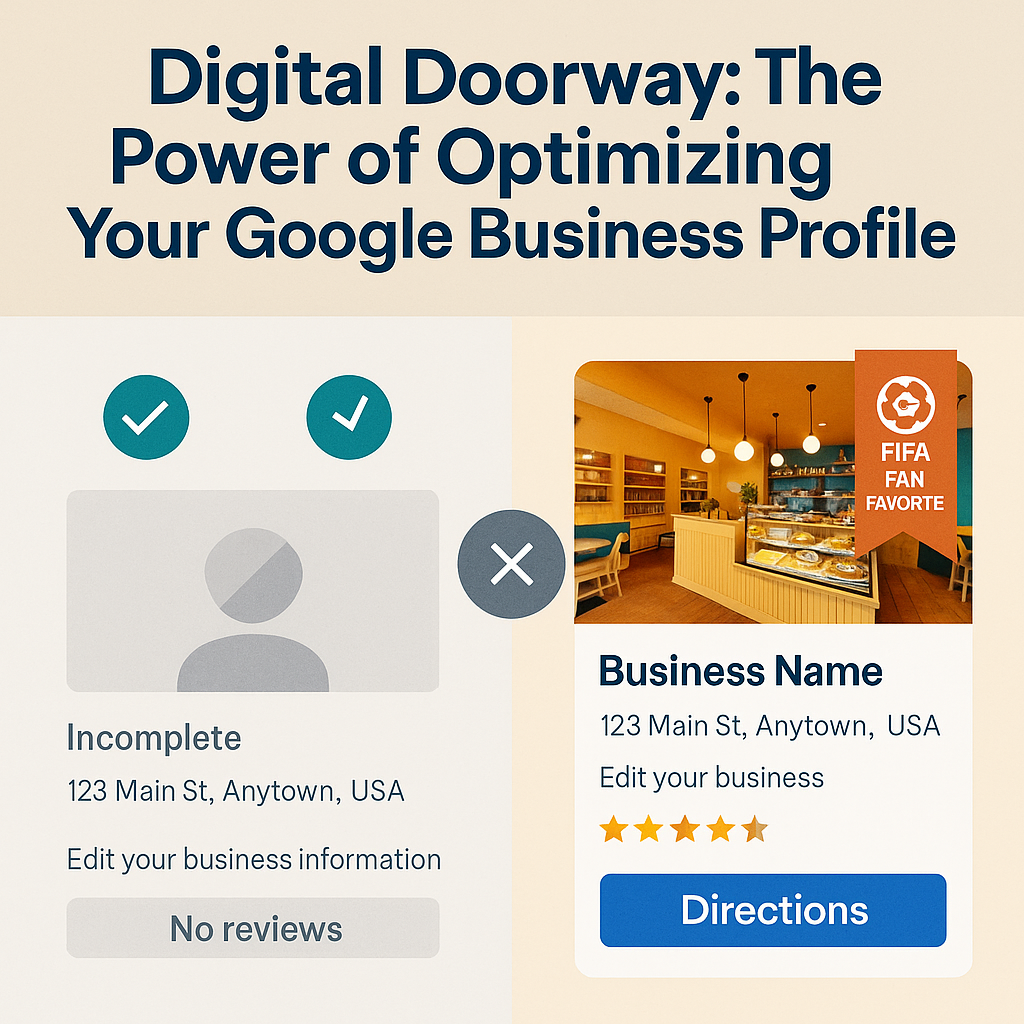
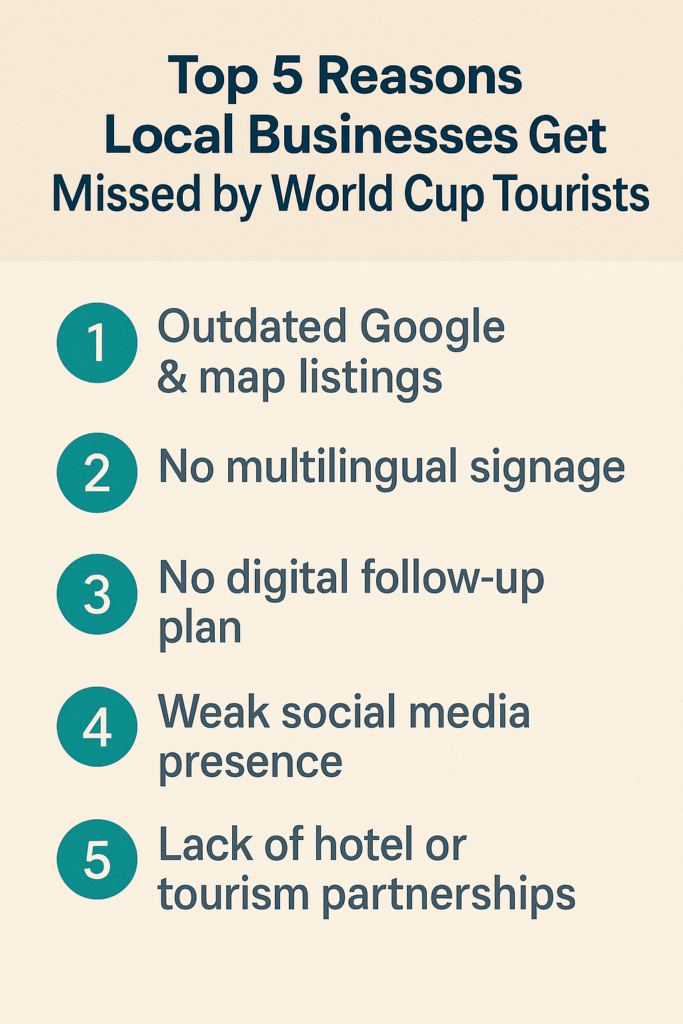
One of the most common and costly mistakes local businesses make is assuming that proximity to a World Cup venue automatically ensures foot traffic. In reality, most international and out-of-town visitors rely heavily on digital tools—Google Maps, Yelp, TripAdvisor, and social media—to plan their activities, meals, and shopping. If your business doesn’t appear in those searches, it might as well not exist.
Even more important is optimizing for “near me” searches, which are often done on-the-go from mobile devices. Keywords like “restaurants near stadium,” “bars near me,” or “World Cup happy hour [city]” dominate search behavior during large events. Yet many businesses don’t take time to update their Google Business Profile or claim their listings on platforms that tourists rely on. If hours of operation, photos, menus, and reviews are outdated or missing, it’s a red flag that sends customers elsewhere. This digital gap isn’t just a tech issue—it’s a visibility problem that costs real revenue.
Barrier 2: Cultural Disconnect and Lack of Multilingual Appeal
World Cup visitors bring diverse languages, cultures, and expectations. Many are seeking more than just a transaction—they want experiences that feel welcoming and inclusive. Unfortunately, local businesses often overlook cultural cues that build trust with international guests. Something as simple as offering menus in multiple languages, having bilingual staff, or providing signage with universal symbols can dramatically improve the comfort level for tourists.
When businesses fail to consider cultural nuances, it creates a silent barrier that can deter even the most curious travelers. This disconnect is particularly pronounced in hospitality-driven industries such as restaurants, retail, entertainment, and service providers. Local businesses that take proactive steps to acknowledge and celebrate cultural diversity—such as creating World Cup-themed décor or honoring visiting countries with music or menu specials—stand a better chance of standing out and being remembered. The key is not just being visible, but being welcoming.
Barrier 3: Poor Collaboration with Local Tourism Ecosystems
Another major hurdle is the lack of alignment between individual businesses and the larger tourism or event ecosystem. Many small businesses operate in silos—focusing only on their own promotions or daily challenges—without leveraging partnerships that could dramatically expand their reach. Hotels, transportation companies, tourism boards, Airbnb hosts, event planners, and fan zones all offer touchpoints where strategic collaboration could amplify local business exposure.

Imagine if your bakery was listed on a custom “Fan Foodie Trail” promoted by the city’s tourism board, or if your boutique participated in a local “World Cup Passport Program” that offered rewards to visitors for visiting multiple small businesses. These ideas only work when there’s proactive outreach and partnership building. Unfortunately, many local businesses either don’t know how to tap into these systems—or don’t know they exist at all. The result is a fragmented approach to marketing that leaves everyone with less.
Barrier 4: Underinvestment in Temporary Campaigns That Drive Long-Term Results
Many business owners make the mistake of viewing the World Cup as a one-time spike rather than the beginning of a long-term customer acquisition funnel. This short-term mindset limits the ability to build meaningful brand relationships. Tourists who visit a business once and then leave without any follow-up or digital interaction represent a huge missed opportunity.
Campaigns designed for visibility during the World Cup should also be structured to capture data and create re-engagement paths. Think loyalty cards with digital sign-ups, QR codes linking to social media, contest entries, or “Thank You for Visiting” email sequences that follow up post-trip. Without these mechanisms, the relationship ends when the guest leaves town. That’s why it’s essential to combine immediate visibility with thoughtful retention strategies. Done right, the World Cup becomes the beginning of a recurring relationship—not a one-time sale.
Barrier 5: Limited Marketing Bandwidth and Lack of a Clear Game Plan
Lastly, even businesses that understand the value of connecting with World Cup guests often lack the marketing leadership or resources to develop and execute a winning strategy. Whether it’s not having someone on staff to manage digital updates, or not knowing where to start with partnerships and signage, the result is often paralysis. This is where a fractional CMO or strategic marketing partner can make all the difference.
By engaging an experienced marketing advisor ahead of the World Cup, businesses can create tailored game plans that align with their capacity, budget, and brand identity. From messaging development to campaign execution, having expert support helps ensure that the opportunity doesn’t pass by while you’re stuck in decision limbo. Local businesses don’t need to “go big” with giant budgets—they need to go smart with clear, actionable steps and aligned marketing leadership.
Awareness is the First Step to Connection
The World Cup will bring the world to your city—but it won’t bring them through your doors unless you meet visitors halfway. By recognizing the barriers—limited digital presence, cultural disconnect, lack of collaboration, short-term thinking, and unclear marketing execution—local businesses can begin taking intentional steps to overcome them. The result isn’t just increased sales in June and July 2026—it’s the possibility of building a loyal customer base that stretches across borders and lasts long after the final match.
In next week’s post, we’ll explore how to make your business visible to out-of-town guests through smart, budget-friendly marketing strategies. We’ll show you how to win the “near me” search game and create a local presence that travelers can’t ignore.
Stop missing out on tourist dollars.
Discover how to bridge the gap and start building authentic connections with out-of-town guests today.
👉 Download the Visitors Welcome Playbook or [Schedule a Discovery Call with VCS]