

Series: Advertising & Paid Media – Part 3 of 4
Why Enrollment Marketing Has Fundamentally Changed in 2026
Enrollment decisions in 2026 look very different than they did even five years ago. Families now research schools the same way they research healthcare providers, housing options, and major life decisions—online, socially, and emotionally. They compare values, culture, safety, and community long before they ever schedule a tour or submit an application. In this environment, educational institutions that rely solely on word-of-mouth, open houses, or organic visibility are increasingly invisible to families who do not already know where to look.

Paid media has emerged as a critical visibility and trust-building tool—not because schools need to “sell,” but because families need guidance. When used responsibly, paid advertising allows schools to show up early in the decision journey with helpful information, reassuring stories, and authentic representation. This presence does not replace relationships—it supports them. It ensures families encounter your school before assumptions are formed elsewhere.
The challenge for many school leaders is philosophical as much as tactical. Paid media can feel uncomfortable, transactional, or misaligned with educational values. Yet, when approached strategically, paid media becomes a service to families—helping them navigate options, ask better questions, and make confident decisions. This reframing is essential for schools seeking to remain competitive and mission-aligned in 2026.
Understanding paid media as a recruitment support system, not a sales engine, is the first step toward using it effectively.
Understanding How Families Actually Choose Schools Today
Families do not begin their enrollment journey with applications—they begin with questions. “Is this school safe?” “Will my child feel seen?” “Do families like us belong here?” These questions are emotional, not transactional, and they shape perception long before facts and figures enter the conversation. Paid media works best for schools when it acknowledges and respects this reality.
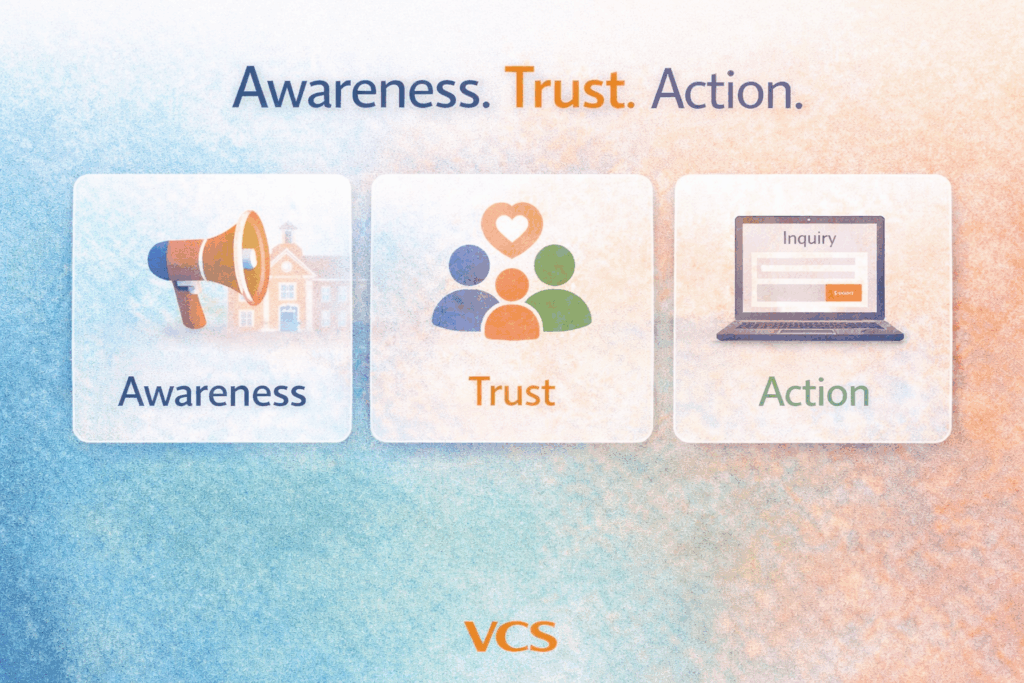
Most families move through a multi-stage decision process: awareness, exploration, validation, and action. During awareness, they are discovering options—often through social platforms, community content, or local search. Exploration involves deeper research, reviews, and comparisons. Validation occurs when families seek reassurance through testimonials, conversations, or visits. Action follows only after trust has been established. Paid media can support each of these stages when aligned thoughtfully.
Importantly, families rarely separate “marketing” from “experience.” Every message, image, and story contributes to their perception of what it feels like to be part of a school community. Paid media does not interrupt this journey—it becomes part of it. Schools that understand this dynamic use paid ads to answer real questions rather than promote superficial highlights.
By aligning paid media with how families think and feel, schools transform advertising into advocacy.
The Strategic Role of Paid Media in School Recruitment
Paid media plays a unique and powerful role in modern school recruitment because it allows institutions to control when, where, and how families encounter their story. Unlike organic channels, which depend on algorithms or timing, paid media ensures consistency during critical enrollment windows. This reliability is especially important during application cycles, open house promotions, and program launches.
Search-based advertising platforms such as Google Ads allow schools to appear when families are actively researching options. Queries like “best elementary schools near me” or “private middle school enrollment” signal intent and curiosity. Showing up in these moments ensures your school is part of the consideration set—not an afterthought.
Social advertising platforms, including Meta, serve a different but equally valuable function. They allow schools to introduce their culture, values, and community visually and emotionally. Stories of student success, family experiences, and classroom moments help families imagine themselves within the school environment. This emotional connection is often the deciding factor.
Together, these platforms form a recruitment ecosystem—one that supports visibility, trust, and action when used strategically.
What Schools Should (and Should Not) Promote Through Paid Media
One of the most common mistakes schools make with paid media is focusing too heavily on features rather than experiences. Academic rankings, program lists, and facility highlights matter—but they rarely inspire action on their own. Families are far more influenced by how a school makes them feel and whether they see alignment with their values and aspirations for their children.
Effective paid media content for schools emphasizes belonging, safety, growth, and community. Stories that highlight student voices, teacher dedication, and family engagement resonate more deeply than generic promotional language. Authentic imagery, real classrooms, real interactions, real moments—builds credibility and trust. Overproduced or stock-heavy content often creates distance rather than connection.
Equally important is knowing what not to promote. Aggressive calls to action, enrollment pressure, or competitive comparisons can erode trust. Schools are not selling products; they are inviting families into a partnership. Paid media should reflect that responsibility.
When schools focus on storytelling over selling, paid media becomes an extension of their mission rather than a contradiction of it.
Using Paid Media to Support the Full Enrollment Journey
The most effective school recruitment strategies use paid media as a guide—not a push. During early awareness stages, ads might introduce the school’s mission, values, or community involvement. Mid-journey messaging can highlight programs, student outcomes, or family testimonials. Later-stage campaigns can support open house registration, tour scheduling, or application reminders.
This sequencing is critical. Schools that jump directly to “Apply Now” messaging often encounter resistance because families are not yet ready. Paid media allows institutions to meet families where they are, providing the right information at the right time. This respectful approach increases engagement while reducing pressure.
Geographic targeting also plays an important role, especially for public and charter schools. Reaching families within defined boundaries ensures relevance and efficiency. Similarly, timing campaigns around enrollment milestones maximizes impact without increasing spending.
When paid media supports the entire journey, enrollment outcomes improve naturally and sustainably.
Measuring Success Without Reducing Families to Metrics
Measurement in school marketing requires nuance. While metrics such as clicks, inquiries, and registrations matter, they do not tell the full story. Success should also be measured by engagement quality, message resonance, and alignment with enrollment goals. Paid media is as much about fit as it is about volume.
Schools benefit from tracking indicators such as open house attendance, inquiry quality, and conversion timelines. These insights reveal whether messaging is attracting the right families, not just more families. Paid media should improve conversations, not overwhelm admissions teams with unqualified leads.
Importantly, leadership teams should view paid media performance over time, not in isolation. Enrollment decisions are rarely immediate, and campaigns improve as insights are gathered and refined. Patience and consistency are essential for meaningful results.
When measurement aligns with mission, data becomes a tool for learning rather than pressure.
Real-World Perspective: How Schools Use Paid Media Successfully
Across the country, schools are seeing success by embracing paid media thoughtfully. A charter school increased tour attendance by sharing short video stories of student experiences on social media months before application deadlines. A private school improved inquiry quality by aligning search ads with family-focused questions rather than program lists. A public district used paid media to highlight community partnerships and extracurricular opportunities, reshaping perceptions among relocating families.
These successes share a common thread: strategy before spending. None relied on aggressive budgets or flashy creative. Instead, they focused on clarity, authenticity, and alignment with family decision-making. Paid media amplified what was already true and meaningful about the school.
These examples reinforce that paid media works best when it reflects real experiences—not marketing aspirations.
What This Means for Educational Leaders in 2026
In 2026, enrollment success depends on visibility, trust, and intentional communication. Paid media is no longer optional for schools competing for attention, it is a strategic responsibility. When used thoughtfully, paid advertising helps families make informed, confident decisions while reinforcing institutional values.
Educational leaders who embrace this approach position their schools as guides rather than promoters. They show up early, communicate clearly, and invite families into a relationship built on trust. Paid media becomes a bridge—not a barrier—between schools and the communities they serve.
Your Next Step: Plan Enrollment Campaigns with Confidence
Before launching paid media for enrollment, schools need clarity—not complexity. Platform choices, messaging, timing, and measurement should all align with a thoughtful recruitment strategy.
That’s why we created The Advertising Campaign Playbook & Toolkit: A Step-by-Step Planning Guide for Purpose-Driven Brands. It helps educational institutions plan paid campaigns that support enrollment goals before budget is spent—ensuring alignment, efficiency, and confidence.
👉 Download the Playbook to plan your next enrollment campaign
👉 Subscribe to The Vivid Perspective for ongoing education marketing insights
👉 Or schedule a discovery conversation to explore enrollment-focused paid media support
When schools lead with clarity and care, families respond with confidence.