
Series: Advertising & Paid Media – Part 2 of 4
Why Choosing the Right Advertising Platform Matters More Than Budget Size
One of the most common—and costly—questions small businesses, non-profits, and educational institutions ask in 2026 is deceptively simple: Should we invest in Google Ads or social media ads first? The wrong answer often leads to wasted spend, frustration, and the belief that “paid advertising doesn’t work for us.” The right answer, however, can unlock momentum, clarity, and measurable growth—even with modest budgets. The truth is that platform choice is not a tactical decision; it is a strategic one that must align with audience behavior, organizational goals, and readiness to convert attention into action.
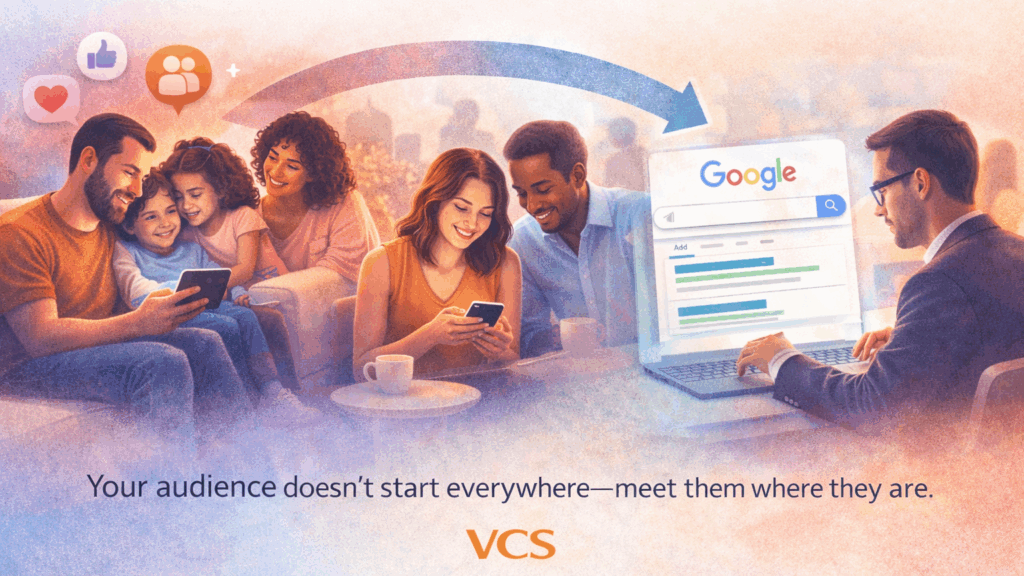
In an era where marketing dollars are scrutinized more than ever, organizations cannot afford to experiment blindly. Every dollar must serve a purpose, support a goal, and move the audience closer to a meaningful outcome. Google Ads and social media ads are not competitors—they are different tools designed for different stages of the decision-making journey. Understanding this distinction is what separates confident advertisers from cautious ones. When leaders understand why a platform works, not just how, they gain control over outcomes.
Too often, organizations choose platforms based on trends, peer behavior, or internal comfort rather than strategic alignment. A school district may default to social media because “that’s where families are,” while a service business may choose Google Ads because “people search for us.” Both assumptions can be correct—or dangerously incomplete. The question is not where people exist online, but how they behave when they are ready to learn, compare, or act. This insight reframes the decision entirely.
Choosing the right platform first is not about perfection; it is about prioritization. And prioritization is the foundation of sustainable advertising success in 2026.
Understanding the Core Difference: Intent vs. Influence
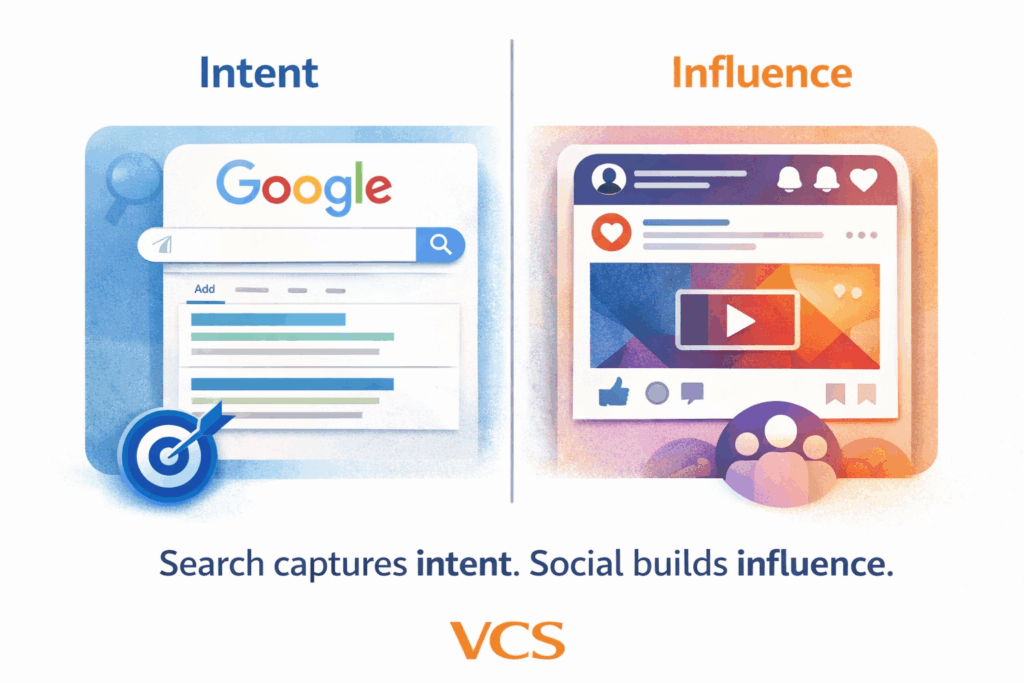
At the heart of the Google vs. social media debate lies one critical distinction: intent versus influence. Search advertising platforms like Google Ads are built around intent. When someone types a query into Google, they are actively seeking information, answers, or solutions. That moment of intent is powerful because it signals readiness. For organizations with clear offerings and defined services, search ads place them directly in the path of motivated decision-makers.
Social media platforms, by contrast, are built around influence and discovery. Platforms such as Meta and LinkedIn reach people while they are scrolling, browsing, and engaging—not necessarily searching. This environment is ideal for storytelling, education, awareness, and relationship-building. Social ads shape perception and familiarity long before a user is ready to convert.
Neither approach is inherently better; they simply serve different purposes. Google Ads capture demand that already exists. Social ads help create demand where awareness is low or competition is high. Organizations that misunderstand this difference often expect social ads to perform like search ads—or vice versa—and are disappointed by the results. Alignment between platform and expectation is what drives satisfaction and success.
Understanding this foundational difference allows organizations to choose their first investment with confidence. When intent and influence are applied intentionally, paid advertising becomes a strategic system rather than a guessing game.
When Google Ads Make the Most Sense for Small Organizations
Google Ads are often the most effective first investment for organizations that offer clearly defined services, programs, or solutions with immediate relevance. If your audience is already searching for what you provide—whether that’s “local dental clinic,” “private school enrollment,” or “nonprofit near me”—search ads allow you to meet them at the exact moment they are seeking answers. This precision is invaluable for small budgets, where efficiency matters more than reach.
For service-based businesses, Google Ads often deliver faster returns because the audience intent is already established. People searching are closer to making a decision, which means fewer impressions are wasted on uninterested audiences. When campaigns are tightly structured around high-intent keywords and specific geographic areas, even modest budgets can produce meaningful results. The key is focus, not volume.
Educational institutions and public organizations also benefit from search advertising when families are actively researching options. Enrollment periods, application deadlines, and program comparisons are all moments of heightened intent. Well-timed search campaigns ensure your institution appears when families are evaluating choices—not after decisions have already been made. This strategic timing amplifies the impact of every dollar spent.
Google Ads work best when organizations are clear on what they offer, who they serve, and what action they want users to take. When those elements are in place, search advertising becomes a reliable engine for qualified traffic and measurable outcomes.
When Social Media Ads Are the Smarter First Move
Social media advertising shines when awareness, education, and trust-building are the primary objectives. Many organizations, particularly non-profits, schools, and mission-driven brands—serve audiences who may not yet be actively searching for them. In these cases, social ads introduce the organization’s story, values, and impact long before a search ever occurs. This early influence shapes perception and primes future decision-making.
Social ads are especially powerful for complex decisions that require emotional connection and reassurance. Choosing a school, supporting a nonprofit, or engaging with a community organization often involves values, trust, and alignment—not just logistics. Platforms like Facebook and Instagram allow organizations to tell visual, human-centered stories that resonate emotionally. LinkedIn, meanwhile, offers credibility and authority for professional and institutional audiences.
For small budgets, social media ads work best when campaigns are tightly focused on a single audience segment and objective. Broad targeting and multiple messages dilute impact and inflate costs. The most successful campaigns prioritize relevance over reach, using storytelling to build familiarity over time. While conversions may not happen immediately, the long-term ROI can be significant when social ads are aligned with broader marketing efforts.
Social advertising is not about interrupting—it is about introducing. When used intentionally, it lays the foundation for future engagement, search behavior, and loyalty.
Common Mistakes Organizations Make When Choosing Platforms
One of the most common mistakes organizations make is choosing platforms based on internal preference rather than audience behavior. Leadership teams may favor social media because it feels more visible, or Google Ads because it feels more transactional. Neither preference is inherently wrong—but both can lead to misalignment if not grounded in strategy. Platform choice must be driven by how audiences think, search, and decide.
Another frequent mistake is expecting immediate results from the wrong platform. Organizations often abandon social ads too quickly because conversions are slower or overspend on search ads without building awareness to support them. Paid advertising works best as a system, not a silo. Each platform plays a role, and impatience often undermines long-term success.
Finally, many organizations attempt to run both platforms simultaneously without sufficient budget or clarity. This “split focus” approach often leads to underperforming campaigns on both fronts. Small budgets require prioritization. Choosing one platform to start, learning from performance, and expanding intentionally is far more effective than trying to do everything at once.
Avoiding these mistakes begins with asking better questions—and committing to strategic discipline.
A Simple Framework for Deciding Where to Invest First
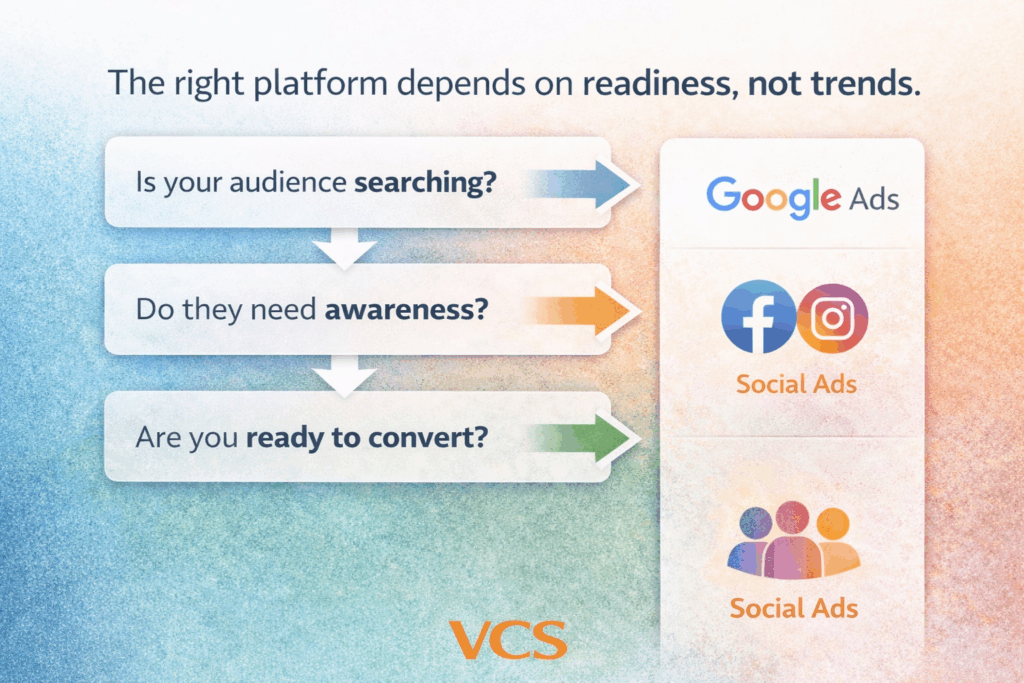
To simplify decision-making, we recommend a three-question framework:
1. Is my audience actively searching for what we offer right now? If yes, Google Ads may be the best starting point.
2. Does my audience need education, trust, or awareness before taking action? If yes, social media ads may be the smarter first investment.
3. Do we have a clear conversion goal and landing experience? If not, social ads can help build readiness while foundational elements are refined.
This framework removes guesswork and replaces it with intention. It allows organizations to choose platforms based on readiness, not pressure. Over time, many organizations benefit from using both platforms—but sequencing matters. Starting with the right platform builds confidence, insight, and momentum.
When decisions are guided by strategy rather than trends, paid advertising becomes predictable and empowering.
What This Means for Your Organization in 2026
In 2026, successful advertising is less about platform mastery and more about strategic alignment. Google Ads and social media ads each play distinct roles in the customer journey, and understanding those roles is essential for small organizations with limited resources. The organizations that win are not those that choose the “best” platform—but those that choose the right platform first.
This clarity reduces wasted spending, improves confidence, and creates a foundation for sustainable growth. Paid advertising becomes less intimidating and more intentional when leaders understand where each dollar fits within the bigger picture.
Your Next Step: Plan Before You Spend
Before investing in Google Ads or social media ads, the most important step is planning. Platform decisions should never be made in isolation—they should be part of a broader campaign strategy that aligns goals, messaging, audience, and measurement.
That’s exactly why we created The Advertising Campaign Playbook & Toolkit: A Step-by-Step Planning Guide for Purpose-Driven Brands. This resource helps organizations clarify their objectives, choose the right platforms, and design campaigns that work before a single dollar is spent.
👉 Download the Playbook to plan with confidence
👉 Subscribe to The Vivid Perspective for weekly strategic insights
👉 Or schedule a discovery conversation to explore the right advertising path for your organization
When strategy leads, platforms follow—and results improve.