

The Vivid Perspective Series, 2025 ReCap & Planning Ahead, Part 4 of 4
Why Goal Alignment is the Secret to Marketing Success
At the heart of every successful marketing plan is alignment. Too often, organizations set marketing goals in isolation—focusing on activity metrics like social media likes or email open rates—without tying them back to business objectives. The result? Marketing becomes busy work instead of a growth driver. In reality, marketing goals should directly serve the overarching mission of the organization, whether that’s revenue growth, donor acquisition, or community engagement. As you plan for 2026, aligning your marketing goals with business objectives ensures every campaign has purpose, impact, and measurable results.
Understanding the Difference Between Marketing Goals and Business Objectives
Before setting aligned goals, it’s essential to distinguish between marketing goals and business objectives. Business objectives are the big-picture outcomes you want to achieve, such as increasing revenue by 15%, expanding into a new market, or boosting community program participation. Marketing goals, on the other hand, are the specific actions that help achieve those outcomes—like generating 500 qualified leads, increasing donor retention by 10%, or driving a 25% increase in website traffic. When marketing goals are directly tied to business objectives, organizations create a clear roadmap that connects effort to impact.
Using SMART Goals as Your Framework
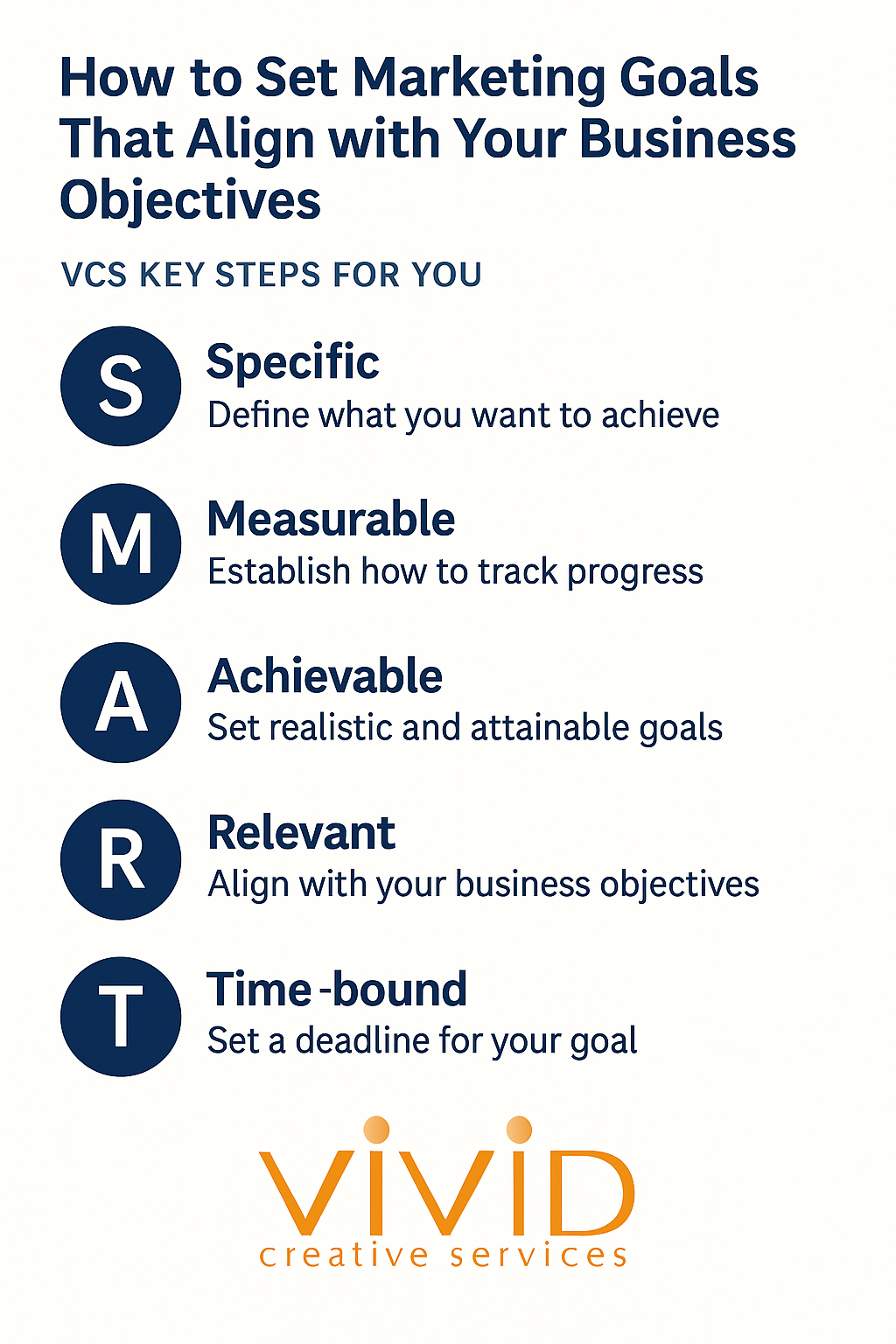
One of the most effective ways to align marketing goals with business objectives is to use the SMART framework: Specific, Measurable, Achievable, Relevant, and Time-bound. SMART goals eliminate ambiguity, providing clarity and accountability for every campaign.
- Specific – Clearly define what you want to achieve. Instead of saying “increase donations,” state “increase online donations by 20%.”
- Measurable – Establish how success will be tracked. For example: “generate 500 qualified leads through a webinar series.”
- Achievable – Set goals that stretch your team but remain realistic given your resources. A small nonprofit may aim for “adding 100 recurring donors in 2026,” rather than an unattainable 1,000.
- Relevant – Ensure the goal ties directly to broader business objectives. If your organizational objective is revenue growth, your marketing goal might be “launch a campaign to increase average purchase value by 15%.”
- Time-bound – Assign a clear deadline. For example: “grow social media engagement by 25% in Q1 2026.”
When organizations frame goals with SMART criteria, they create clarity, accountability, and measurable progress. For instance, a nonprofit aiming to raise $500,000 in 2026 might set a SMART marketing goal of: “Launch a donor acquisition campaign that adds 2,000 new donors by June 30, 2026, through direct mail, digital ads, and peer-to-peer fundraising.” SMART goals ensure every marketing effort is practical, measurable, and aligned with the mission.
Prioritizing Goals That Deliver the Highest Impact
Not all goals carry equal weight and setting too many can dilute your team’s focus. The key is prioritization, choosing the marketing goals that directly deliver the most significant impact on business objectives. For example, a small business with a goal of increasing revenue should prioritize lead generation and conversion campaigns over vanity metrics like social media followers. A local government agency aiming to increase community engagement might focus on boosting program sign-ups rather than newsletter clicks. Prioritization ensures resources, energy, and budgets are directed toward the goals that matter most.
Aligning Short-Term Wins With Long-Term Vision
While it’s tempting to focus only on immediate outcomes, aligned marketing goals should balance short-term wins with long-term vision. Short-term wins—such as growing your email list, increasing website visits, or launching a campaign—provide momentum and evidence of progress. Long-term goals—like building brand equity, nurturing loyal donors, or expanding into a new market—drive sustainable growth. For example, a nonprofit may set a short-term goal of increasing Giving Tuesday donations while pursuing a long-term objective of growing recurring donor programs. Balancing the two ensures your marketing delivers both immediate impact and enduring value.
Embedding Measurement and Accountability in Goal Setting
Aligned goals are only powerful if they’re measured. Every marketing goal should include clear performance indicators and accountability. For instance, a business with the objective of improving customer retention may set a goal of reducing churn by 5%, tracked through monthly customer satisfaction surveys and renewal data. A nonprofit might measure donor growth through acquisition costs and retention rates. Embedding measurement ensures leaders can evaluate progress and adjust strategy when needed. Accountability—through regular reporting and ownership—creates a culture where goals aren’t just words, but commitments.
Real-World Example: A School District Aligns Goals With Objectives
Consider a school district with the objective of increasing enrollment by 8% for the 2026–27 academic year. Instead of setting vague marketing goals like “increase awareness,” the district created SMART-aligned marketing goals: run a targeted ad campaign to generate 1,000 new inquiries, host 10 open houses, and increase website conversions by 15% within six months. By aligning these goals with the enrollment objective, the district was able to track each campaign’s contribution to student enrollment. The result? Enrollment increased by 9%, proving that alignment between marketing and organizational goals drives measurable outcomes.
Turning Goals Into Action Plans
Goals without execution are dreams on paper. Once your aligned marketing goals are defined, the next step is turning them into action plans. Break each goal into smaller tasks, assign ownership, and set timelines. For example, if the goal is to generate 500 new leads, tasks might include creating a lead magnet, running a paid ad campaign, and scheduling weekly performance reviews. Creating action plans ensures accountability and makes progress visible. When teams understand not just what the goal is but also how it will be achieved, execution becomes focused and efficient.
Align for Success in 2026
Marketing goals are not just checkboxes—they are the bridge between your organizational mission and the actions you take to achieve it. By distinguishing between goals and objectives, using SMART frameworks, prioritizing for impact, balancing short- and long-term outcomes, and embedding accountability, you ensure your marketing serves a higher purpose. In 2026, organizations that align goals with objectives will stand out as focused, efficient, and results-driven.
Goals that align drive growth that lasts. Use the Year-End Marketing Playbook + Toolkit to set SMART goals that link directly to your business objectives — and build the foundation for a powerful new year.
If you’d like help developing strategic, measurable goals, contact Vivid Creative Services to start your planning session today.