
Series: Advertising & Paid Media – Part 4 of 4
Why Media Buying Is a Strategic Leadership Function—Not a Tactical Task
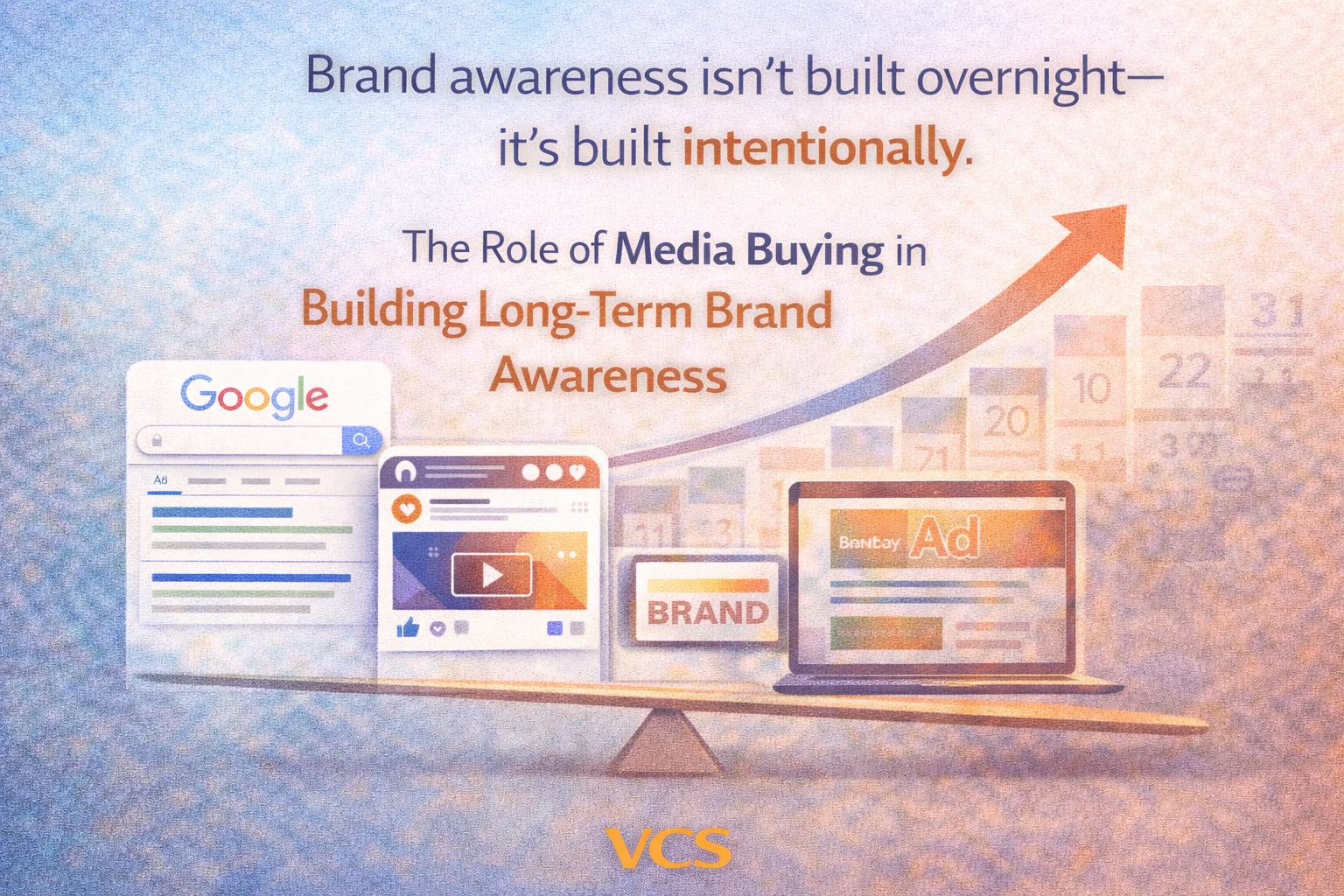
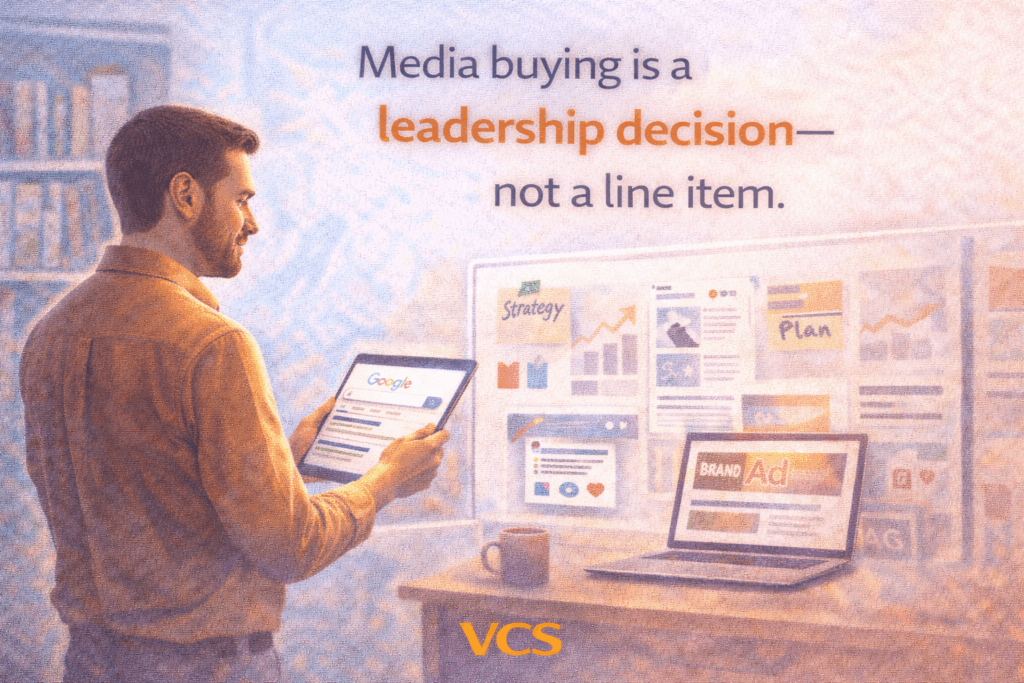
Media buying is often misunderstood as a mechanical task—selecting platforms, placing ads, and managing budgets. In reality, media buying is one of the most strategic levers an organization can pull to shape perception, credibility, and long-term brand equity. In 2026, where audiences are overwhelmed by content and advertising noise, where and how your brand appears matters just as much as what you say. Media buying is the discipline that ensures those decisions are intentional rather than reactive.
For small businesses, non-profits, schools, and public institutions, this distinction is critical. Limited budgets amplify the consequences of poor placement and short-term thinking. When media buying is treated as a checklist item rather than a strategic function, organizations often chase impressions instead of influence. The result is fragmented visibility that fails to compound over time. Strategic media buying, by contrast, aligns advertising decisions with brand goals, audience behavior, and long-term growth.
At its core, media buying is about stewardship. It governs how resources are invested to earn attention responsibly and consistently. Leaders who understand this role move beyond campaign-by-campaign thinking and begin building brand presence with intention. This shift—from tactical execution to strategic leadership—is where long-term brand awareness is born.
The Difference Between Short-Term Campaigns and Long-Term Brand Presence
Not all advertising is designed to convert immediately—and that is not a flaw. Short-term campaigns are essential for driving specific actions such as registrations, inquiries, or sales. However, when organizations rely exclusively on conversion-driven campaigns, they often undermine long-term awareness and trust. Brand awareness is built through consistency, repetition, and relevance over time—outcomes that require a different mindset and media strategy.
Long-term brand presence is cumulative. Each exposure reinforces familiarity, credibility, and recognition. Media buying ensures those exposures occur in the right environment and at the right cadence. This is especially important for organizations with longer decision cycles, such as educational institutions, non-profits, and service-based businesses. Audiences may not act immediately, but repeated, well-placed visibility ensures your brand is remembered when they are ready.
A strategic media buying approach balances short-term needs with long-term brand building. It recognizes that awareness campaigns support future conversions by lowering resistance and increasing trust. Organizations that invest only in last-click performance often struggle with rising costs and diminishing returns. Those that invest in awareness alongside performance create resilience.
Understanding this balance allows leaders to allocate budgets with confidence and foresight.
How Media Buying Shapes Brand Perception—Even When Ads Aren’t Clicked
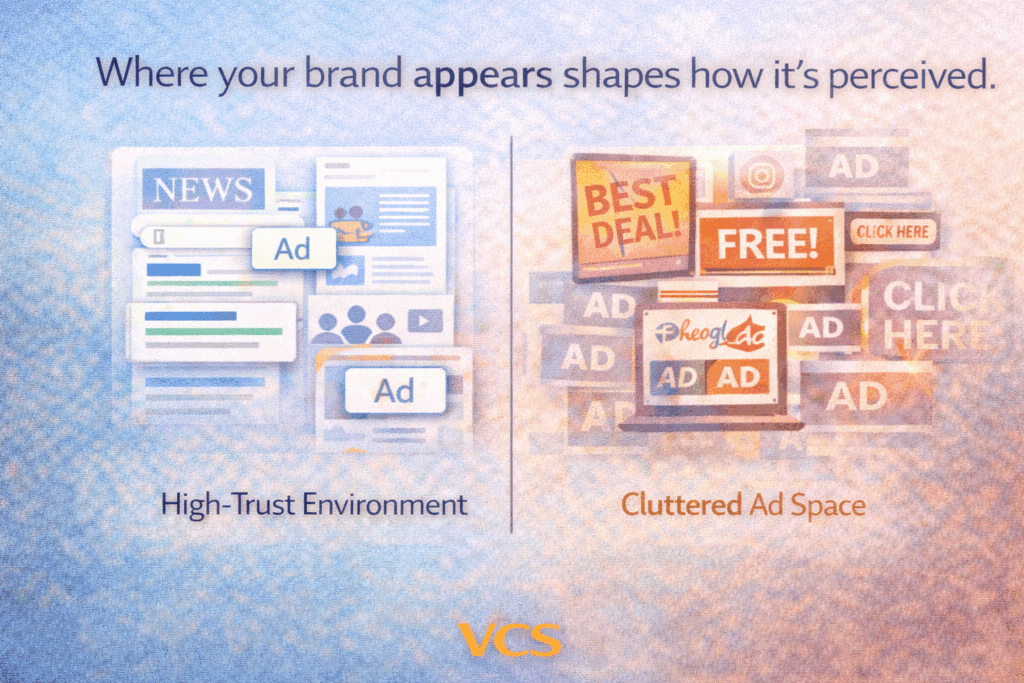
One of the most overlooked aspects of media buying is its influence on brand perception, independent of direct engagement. Audiences form opinions simply by seeing where a brand appears. Ads placed alongside credible content, trusted platforms, or respected publishers inherit a level of authority by association. Conversely, poorly placed ads can erode trust—even if the message itself is sound.
This is why placement decisions matter deeply. Appearing consistently in relevant, contextually aligned environments reinforces legitimacy. For example, a community health organization advertising within local news platforms signals credibility and civic engagement. A school advertising alongside family-focused content reinforces relevance and care. These signals accumulate subconsciously over time.
Strategic media buyers consider context, not just cost. They evaluate platform environments, audience mindset, and content adjacency. Whether placing ads through Google Ads, Meta, or programmatic networks, the goal is not just reach—it is resonance. Every placement either strengthens or weakens brand equity.
When leaders understand that “not clicked” does not mean “not noticed,” they begin to appreciate media buying as a brand-building discipline.
The Role of Consistency and Frequency in Brand Awareness
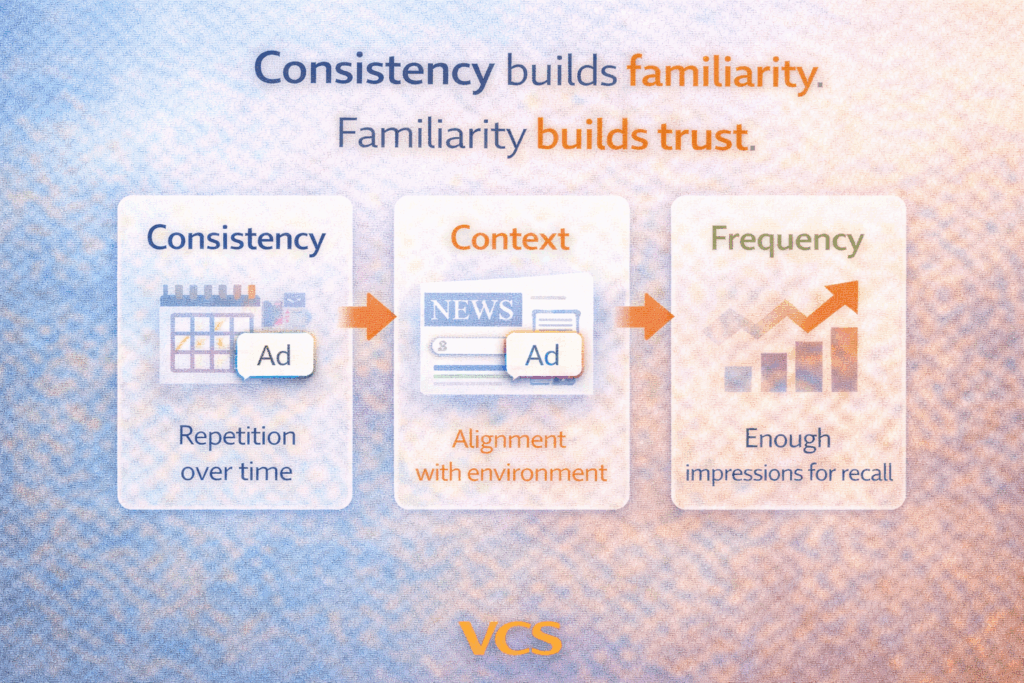
Brand awareness is not built through sporadic exposure. It is built through consistency and frequency over time. Media planning—the strategic counterpart to media buying—determines how often, how long, and how consistently audiences encounter your brand. Without thoughtful planning, even well-designed ads fail to leave a lasting impression.
Frequency matters because trust is reinforced through repetition. Seeing a brand once sparks recognition; seeing it consistently builds familiarity. Media buying ensures that exposure occurs without overwhelming or fatiguing the audience. This balance is especially important for organizations with smaller budgets, where efficiency and pacing are critical.
Consistency across channels also plays a key role. When messaging, visuals, and tone align across platforms, audiences experience coherence rather than confusion. Media buying orchestrates this alignment by sequencing placements intentionally rather than scattering them randomly. Over time, this coherence becomes a competitive advantage.
Organizations that commit to consistent, measured visibility outperform those that rely on bursts of attention followed by long periods of silence.
Why Media Buying Is Especially Critical for Small Organizations
Small organizations often assume that brand awareness is a luxury reserved for large enterprises. In reality, the opposite is true. Limited recognition makes awareness more important—not less. Media buying allows small organizations to punch above their weight by appearing consistently in the right places rather than everywhere at once.
Strategic media buying helps small organizations avoid reactive spending. Instead of boosting posts or launching last-minute ads, they plan visibility around key moments and audiences. This proactive approach reduces waste and increases impact. Over time, it builds familiarity that lowers acquisition costs and improves campaign performance.
Importantly, media buying also protects brand integrity. By controlling placement and pacing, organizations avoid appearing opportunistic or inconsistent. This is particularly important for mission-driven brands, where trust and credibility are non-negotiable.
When media buying is approached strategically, small organizations gain control over their narrative and presence.
Common Media Buying Mistakes That Undermine Brand Awareness
One common mistake is chasing the lowest cost per impression without considering context. Cheap placements may deliver volume but fail to build trust or relevance. Another frequent error is over-rotating creative too quickly, preventing messages from sticking. Brand awareness requires time and repetition—constantly changing messaging resets progress.
Organizations also undermine awareness by disconnecting media buying from brand strategy. When placements are selected without regard to audience values or brand positioning, visibility becomes noise. Media buying should amplify brand clarity, not dilute it.
Finally, many organizations abandon awareness efforts prematurely because results are not immediately measurable. Brand equity builds gradually, and impatience often cuts momentum short. Leaders who understand this resist the urge to optimize away long-term value.
Avoiding these mistakes requires leadership discipline and strategic patience.
How to Measure Brand Awareness Without Obsessing Over Vanity Metrics
Measuring brand awareness requires a broader lens than direct-response campaigns. While impressions and reach matter, they are not the full story. More meaningful indicators include increases in branded search, direct website traffic, engagement quality, and inquiry familiarity. These signals reflect growing recognition and trust.
Surveys, feedback loops, and anecdotal insights also provide valuable context. When prospects mention “seeing you everywhere” or “feeling familiar with your brand,” awareness is working. Media buying supports these outcomes by maintaining consistent presence across relevant touchpoints.
Organizations should view awareness measurement as directional rather than absolute. The goal is progress, not perfection. Over time, awareness reduces friction across all marketing efforts, improving performance holistically.
When measurement aligns with purpose, brand awareness becomes a strategic investment rather than a guessing game.
Real-World Perspective: How Strategic Media Buying Builds Durable Brands
Consider a regional non-profit that committed to year-round visibility within trusted local publications and social platforms. While early campaigns did not spike donations immediately, brand recognition increased dramatically. Over time, event attendance grew, donor acquisition costs dropped, and partnerships became easier to secure.
Similarly, a small service business that invested in consistent media placements alongside local content saw inbound inquiries increase—even when ads were paused. The brand had become familiar and credible. These outcomes were not accidental; they were the result of disciplined media planning and buying.
These examples highlight an essential truth: media buying builds brand memory. And memory drives preference.
What This Means for Leaders in 2026
In 2026, brand awareness is no longer optional, it is foundational. Media buying is the mechanism that turns strategy into sustained visibility. Leaders who treat media buying as a strategic function—not a tactical afterthought—build brands that endure beyond campaigns.
This approach requires clarity, patience, and alignment. It rewards organizations that think long-term and act intentionally. When media buying is guided by purpose and planning, brand awareness compounds into trust, loyalty, and growth.
Your Next Step: Plan Media Buying with Long-Term Vision
Before placing ads, organizations must decide what they want to be known for—and where that story should live. Media buying without strategy risks wasted spend and diluted impact.
That’s why we created The Advertising Campaign Playbook & Toolkit: A Step-by-Step Planning Guide for Purpose-Driven Brands. It helps organizations align media buying decisions with brand goals, audience behavior, and long-term growth—before budget is spent.
👉 Download the Playbook to plan media with intention
👉 Subscribe to The Vivid Perspective for strategic marketing insights
👉 Or schedule a discovery conversation to explore media buying support
When strategy leads media, brand awareness follows.